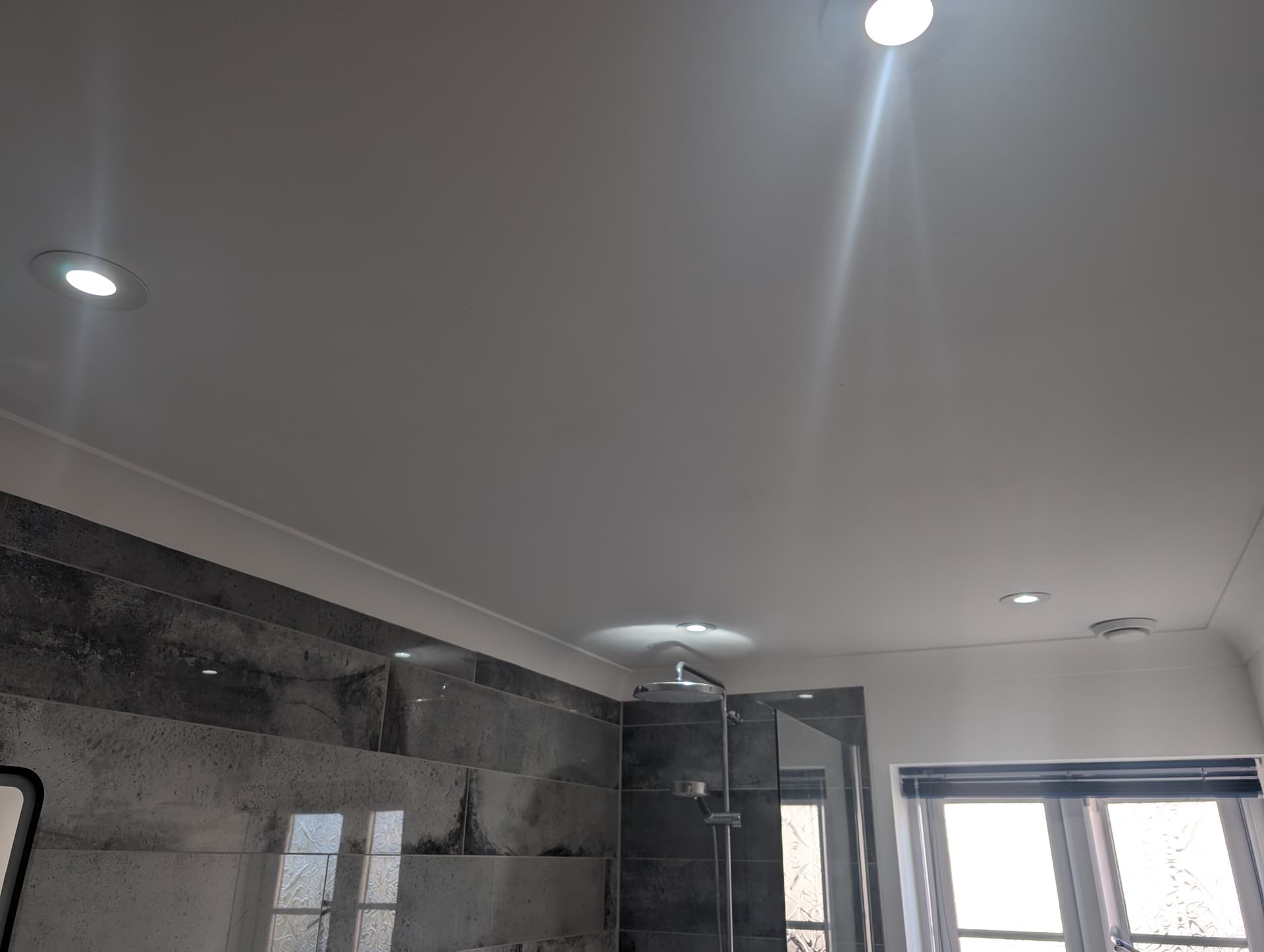
The Problem
Some time ago, I replaced the GU10 lights in our family bathroom with Aqara smart bulbs. While this worked well, it created an unintended issue: the extractor fan would continuously run, since the lights required constant power. Fortunately, the fan had an isolator switch outside the bathroom, allowing it to be turned off manually. However, this introduced another problem — users would often forget to turn the fan on, or forget to switch it off afterward.
The Solution
After some frustration, I decided to address the issue properly. I removed the isolator switch to check whether there were neutral wires in the back box and if there was enough space to fit a relay.
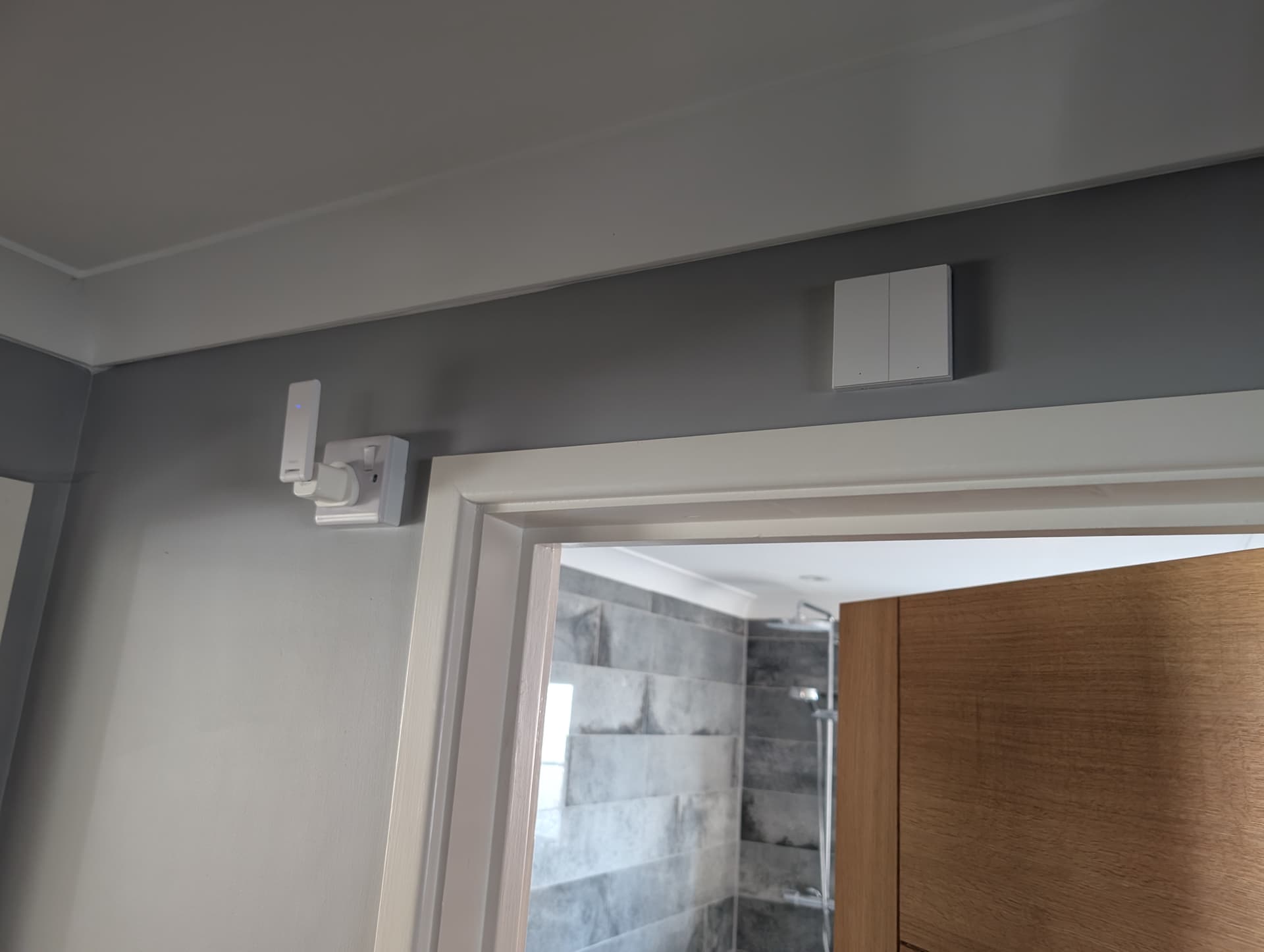
Thankfully, there was a neutral present, so I installed a Single Gang Aqara Relay. This not only allowed me to automate the fan but also provided the added benefit of monitoring its power usage. To accommodate the relay, I extended the back box with a single gang pattress box, giving me enough depth to install a socket where the old isolator switch was — more on that shortly.
(Image: Isolator switch replaced with a relay and a new single gang socket for the Aqara Hub. An H1 Wireless Switch is also installed for manual fan control.)
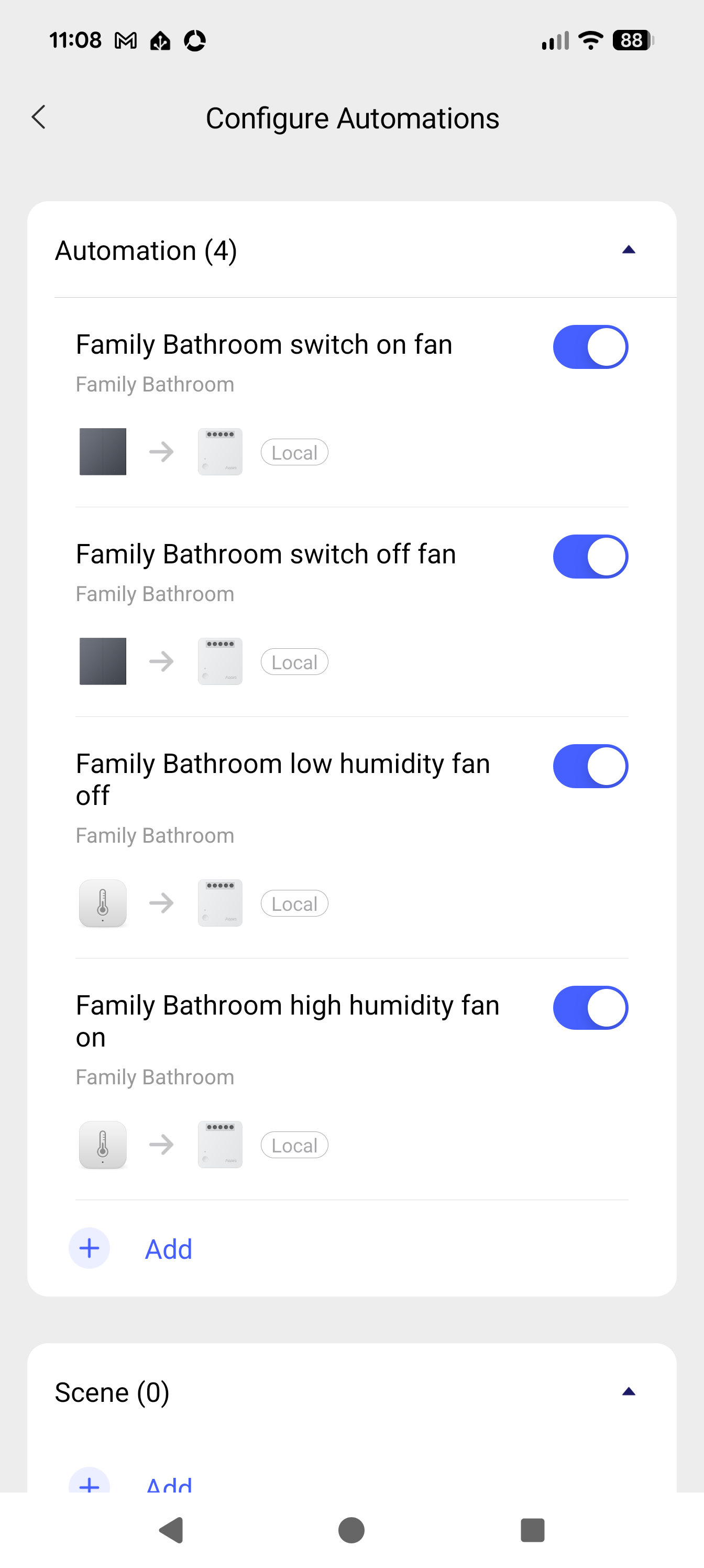
With the relay installed, I could now automate the fan using an Aqara Temperature & Humidity Sensor. The fan automatically turns on when humidity rises above a set threshold and turns off once it drops back down — no more forgetting!
Independent Bathroom Setup
I added a single gang socket where the isolator switch used to be to power a dedicated Aqara Hub M100. I moved all bathroom devices — lights, relays, window and leak sensors — to this hub so that all automations remain local and independent. This means that even if Aqara’s cloud services go down or another hub fails, the bathroom automations continue to operate seamlessly.
I also installed an H1 Wireless Switch outside the bathroom, allowing users to manually control the fan if they prefer not to wait for humidity-based automation.
Lighting Controls
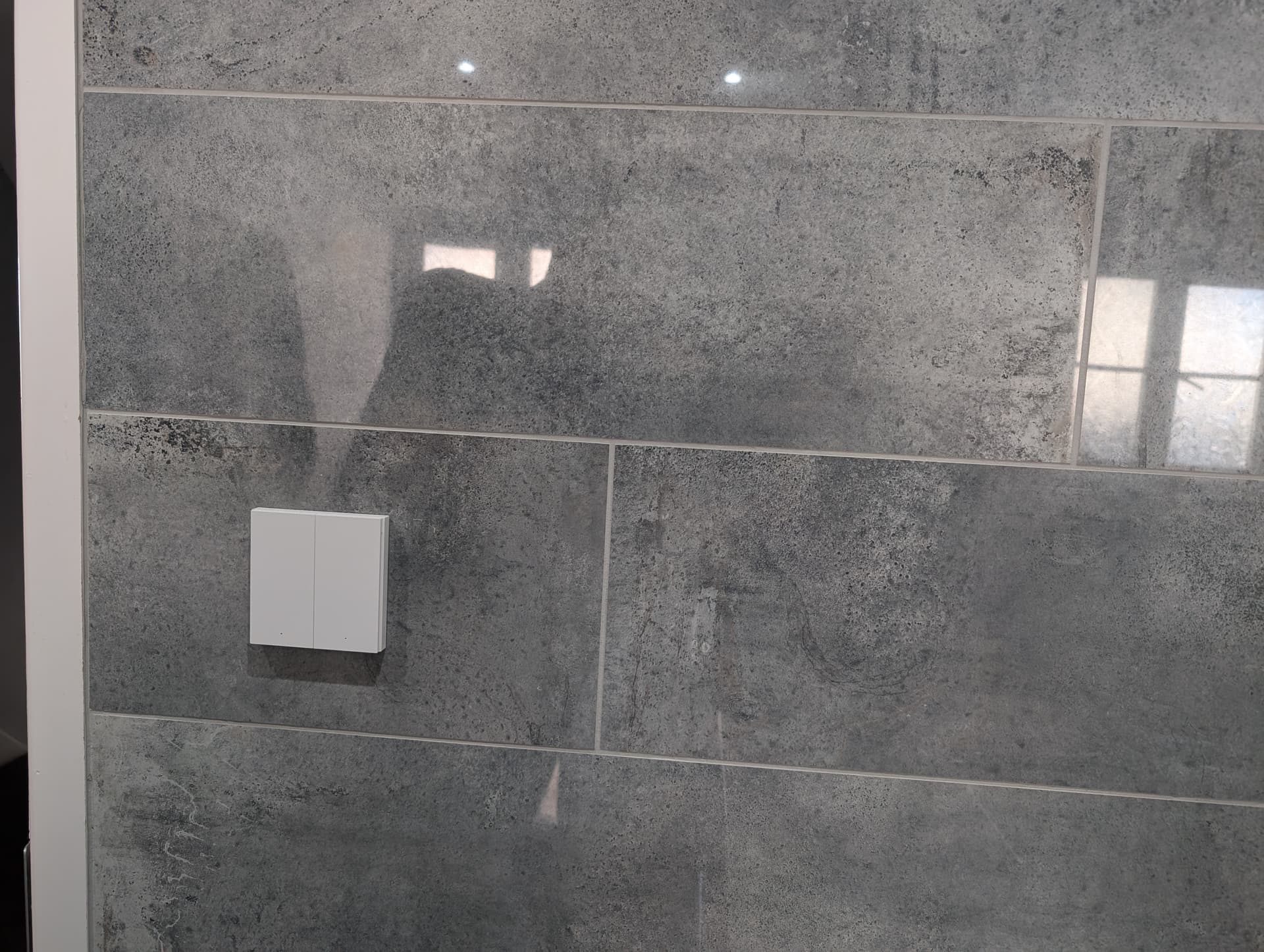
Inside the bathroom, I mounted a two-gang H1 Wireless Button. One button activates a cool white lighting scene, while the other switches to warm white. Amusingly, the males in the house prefer the warm light, whereas the females prefer cool white.
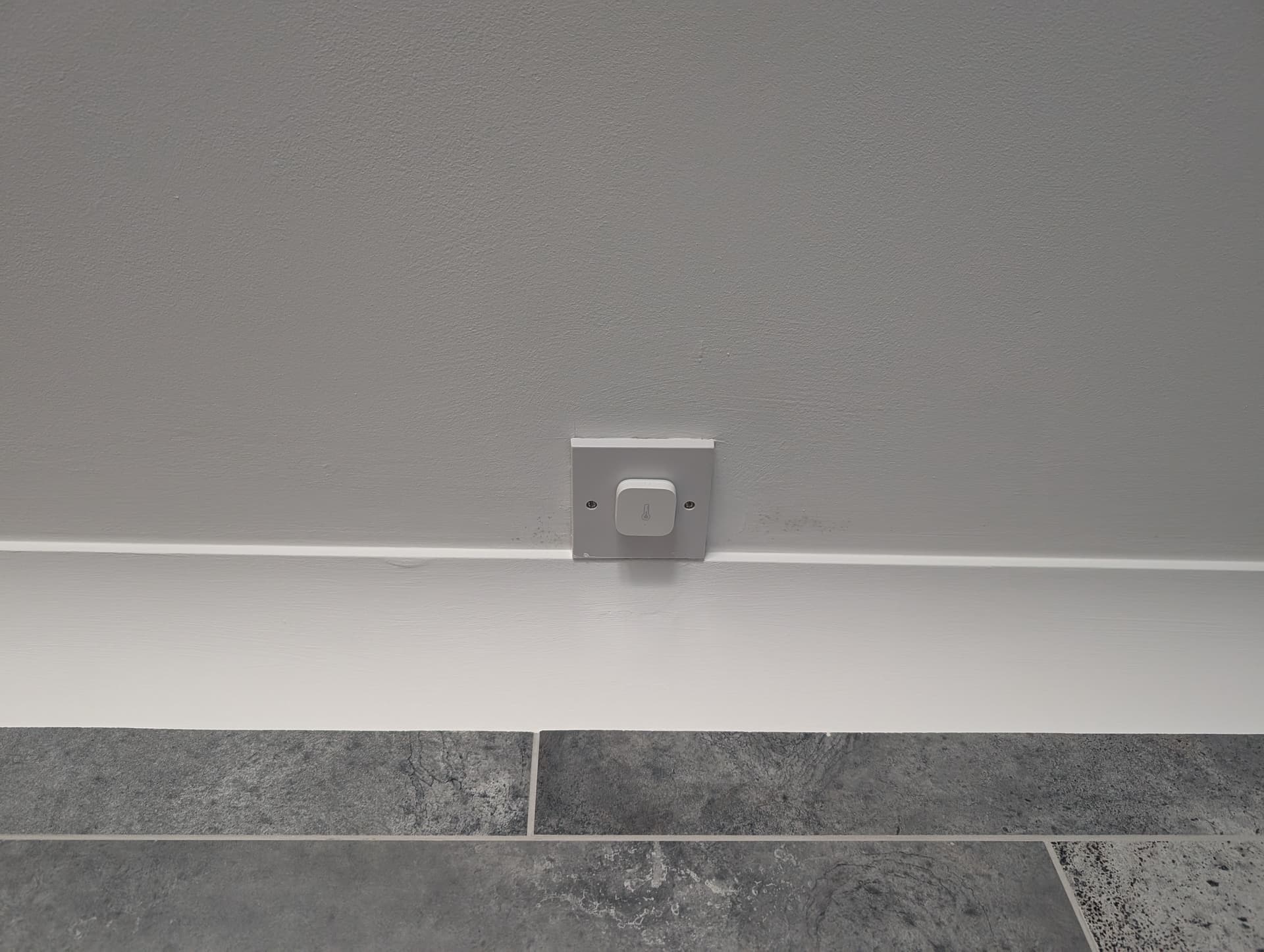
The Aqara Temperature & Humidity Sensor is mounted high on the ceiling where the old pull cord used to be, ensuring quick and accurate readings of environmental changes.
Behind the ceiling cover is another Aqara Relay, permanently powered. This relay monitors the total energy consumption of the lights and allows me to isolate power to the fixtures for maintenance when needed.
Results
The setup works flawlessly. All automations trigger reliably, and the fan and lights now operate exactly as intended — intelligently and independently.
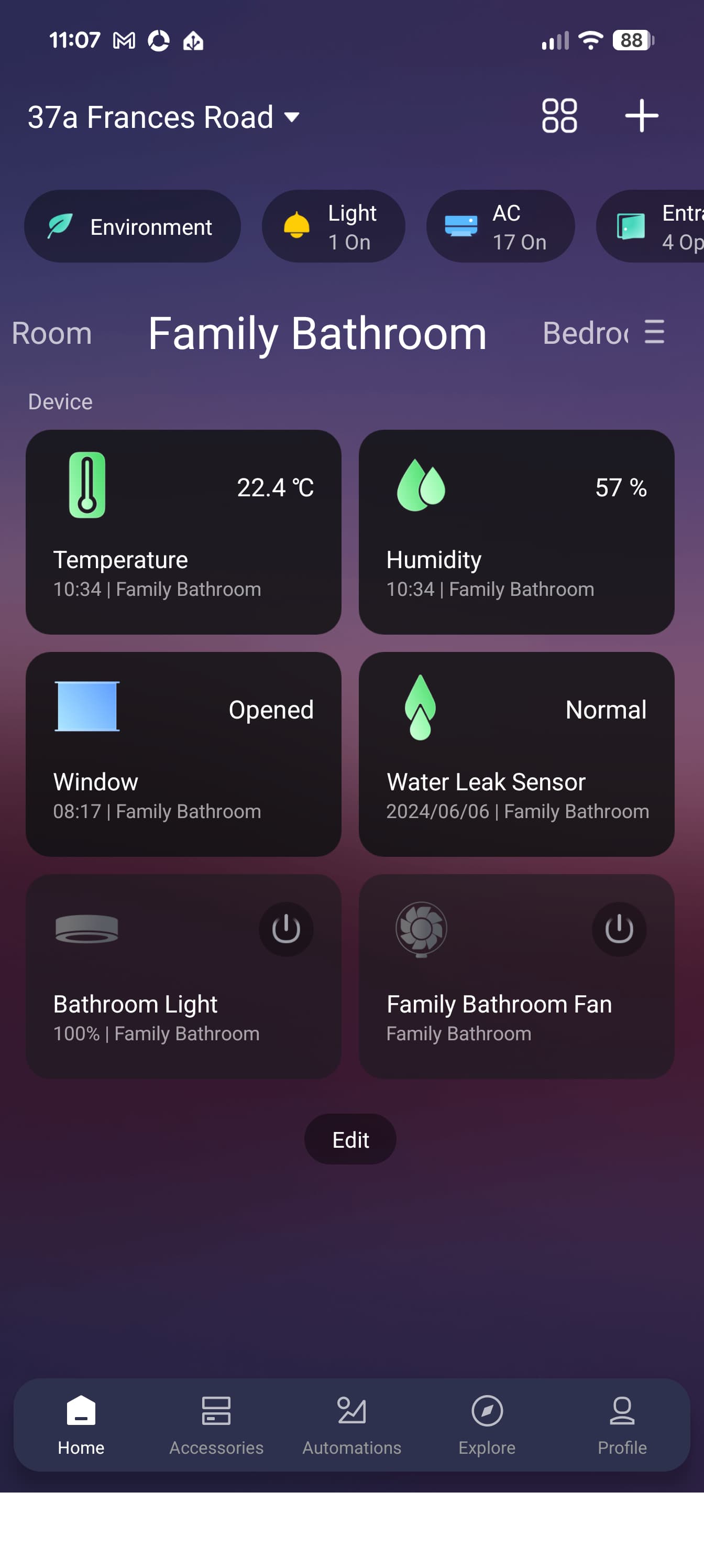
Below is an overview of the room setup and automation logic.
The lights on and how they create a really night bright setup.