FP300 Matter over Thread vs Zigbee Functionality

What is the limiting factor in using Matter over Thread vs Zigbee when it comes to granular control and functionality of the FP300 Multi Presence Sensor. While I can understand that other ecosystems like Apple Home may have limitations to what they choose to implement, but when paired to an Aqara Hub through Matter the level of controls are limited to sensitivity and time out, there’s no ability to adjust any of the other settings that are available via Zigbee. Is this an Aqara choice, or a Matter protocol limitation as I can’t see how the Thread radio interface could be the limiting factor.

I started with 2 FP300s directly paired to my Apple Home but after some very inconsistent behaviour and locked with presence detection on. To enable more functionality I have added an M100 and also paired them via Matter to the hub. I am now at least able to update firmware to the latest and adjust sensitivity and timing but nothing else.

Aqara currently strictly follows the standard when implementing Matter over Thread and that’s why they don’t implement custom extensions. They’re trying to be a book example of Thread devices, and implementing custom extensions could break some third party ecosystems that aren’t ready for any non-standard communication.

And in case of Zigbee - Aqara already uses its custom extensions of this protocol for many other devices, and that’s why any advanced settings and features is only available with Zigbee.

So in short - non-standard settings could break Thread implementation in third party ecosystems, Aqara’s Zigbee implementation is already built for use with advanced settings and features.

2 Likes

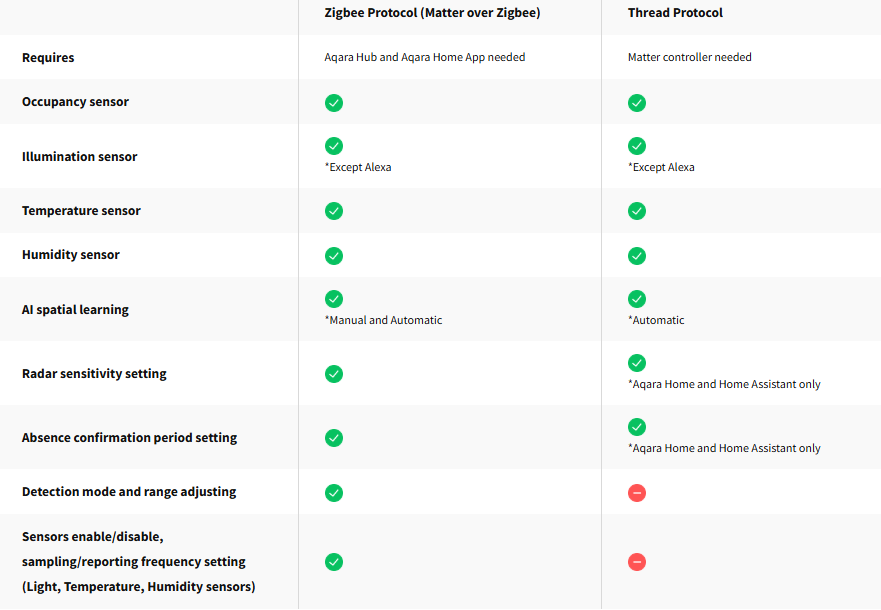
The Aqara shop has this description of the FP300:

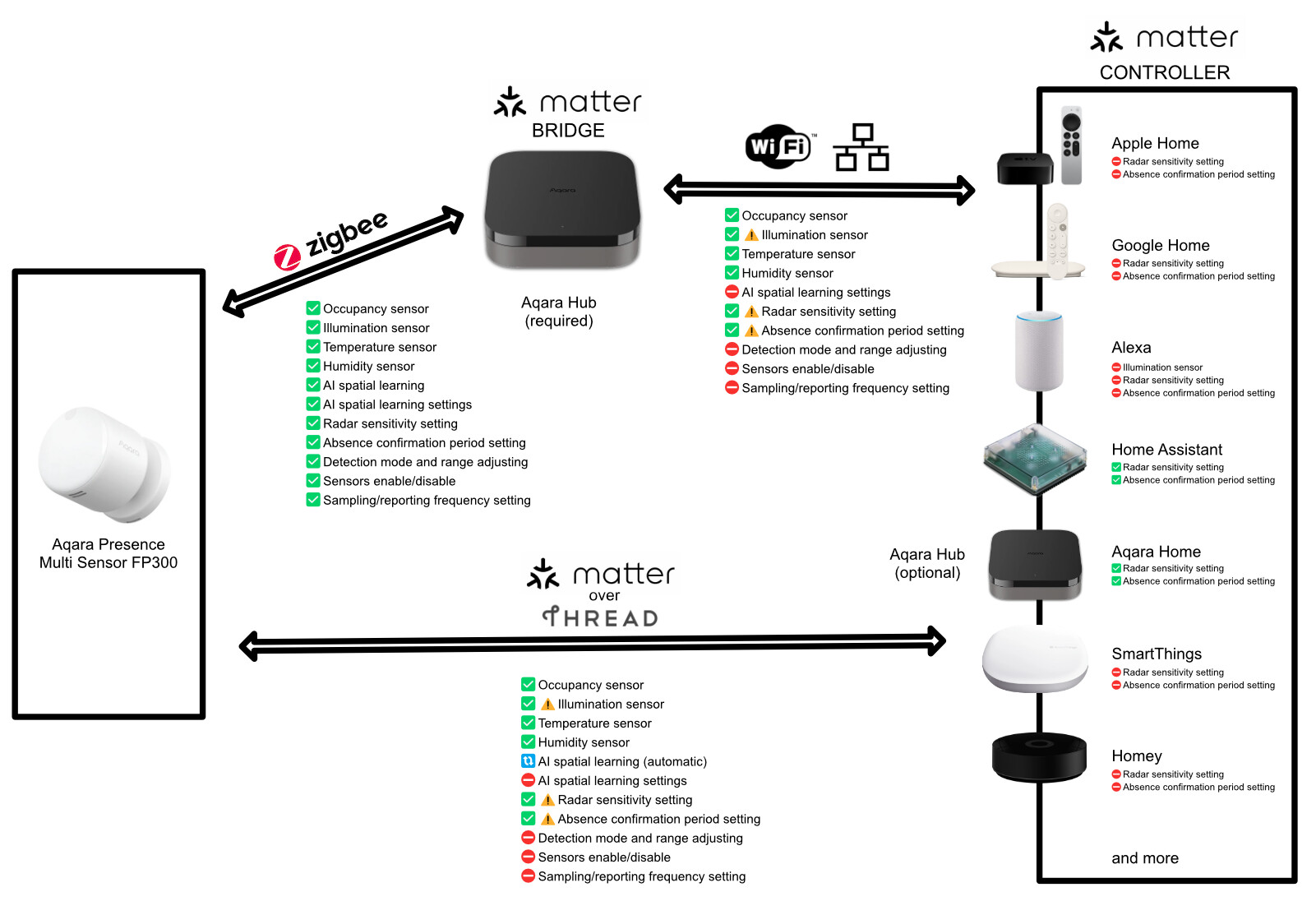
However, it would be better presented as follows:

A few clarifications:

First, “Zigbee over Matter” isn’t technically a real term. In this context, it simply refers to the FP300 connecting via Zigbee to an Aqara Hub, which then acts as a Matter bridge.

Think of Thread as the transport layer, similar to Wi-Fi or Ethernet. It provides the infrastructure (routing, mesh, IPv6). To a Thread node, data is just an encrypted packet, so it doesn’t care if it’s a temperature reading or a switch command.

Matter sits on top of that. It defines the device type and capabilities. Without Matter, the hub would see a device but wouldn’t know if it should light up, heat a room, or lock a door.

Matter ensures compatibility via “Standard Clusters,” but also allows for “Manufacturer Specific Clusters” for proprietary features. While these custom features might not work across all platforms, the core functionality always will. If the Connectivity Standards Alliance (CSA) agrees, these custom features can eventually become part of the official standard in future updates.

However, there is often a delay. Manufacturers need time to implement new standards, and platforms (like Apple) need time to update their apps. For example, the PIROccupiedToUnoccupiedDelay exists in the Matter OccupancySensing cluster. However, Apple Home primarily uses the reported occupancy status and does not offer direct support or configuration of this attribute in the UI.

Furthermore, it must be said that Aqara could use the “Manufacturer Specific Clusters” in a standard-compliant manner, enabling specific settings to be configured via Matter over Thread. However, this would require implementation in the hub’s firmware. While I could theoretically imagine this for Aqara hubs, it is highly unlikely that other hub manufacturers would support special “Aqara functions”. However, since the functions are already implemented via Zigbee, it is unnecessary to use a different transport route, because you would always need an Aqara hub regardless.
5 Likes

Appreciate the detailed explanation and capability mapping by ecosystem… now to be patient while Matter continues to mature and hope that all the ecosystem partners adopt the updates promptly.

Unfortunately, it must be said that PIROccupiedToUnoccupiedDelay is already included in the Matter 1.0 application cluster specification. And now we already have Matter 1.5. I don’t know why Apple, for example, is not taking the initiative to improve its smart home app, Apple Home. Presumably, they are currently busy with other things, such as developing artificial intelligence for Siri.

2 Likes