Aqara Spatial Multi-Sensor FP400 Third-Party Matter Platform Pairing Guide**
For users · Apple Home / Google Home / Amazon Alexa / SmartThings / Homey / Home Assistant
1. Overview
The FP400 is Aqara’s mains-powered spatial sensor. Built on 60 GHz mmWave radar, it lets you divide a space into up to 8 custom Monitoring Zones, track up to 10 targets at once, and reports whole-space occupied/unoccupied status together with illuminance. The device is powered over USB-C (5V 1A DC) and supports dual wireless protocols — Zigbee and Thread (firmware Thread v1.1.9.6+ / Zigbee v0060+).
Advanced parameters such as zones, detection sensitivity, and the Absence Confirmation Period can only be configured in Aqara Home (app v6.4.1+, plugin 3.0.40+). The recommended order is therefore: first add the FP400 to Aqara Home and finish all zone configuration, then share it to third-party platforms with a Matter pairing code.
This guide is written for users without an Aqara hub: Aqara Home (app v6.4.1+, plugin 3.0.40+) acts here only as a configuration app, and the FP400 joins the network through a Thread Border Router you already own (for example, a HomePod mini) — no additional Aqara hub is required.
Why add to Aqara Home first? If you skip Aqara Home and directly scan the Matter QR code on the device body or in the manual with a third-party app, the FP400 comes online only as “1 occupancy sensor + 1 illuminance sensor” — you cannot create custom zones, and zone automations are unavailable. Only the “add to Aqara Home first, then share” flow syncs each Monitoring Zone to third-party platforms as separate occupancy sensors.
Secondary pairing code reminder: When adding the device to the second and any subsequent platform, use the “secondary Matter pairing code” generated in Aqara Home. Do not repeatedly reuse the original QR code on the device body or in the manual, or pairing will fail.
2. Before you start
2.1 What you need
| Item | Details |
|---|---|
| FP400 device | Aqara Spatial Multi-Sensor FP400 + USB-C cable |
| Power adapter | USB-C adapter with 5V 1A DC output (do not use a low-power charging port) |
| Aqara Home app | v6.4.1+, plugin 3.0.40+; installed and signed in with an Aqara account (used only as a configuration tool — no Aqara hub required) |
| Thread Border Router (home hub) | An existing Matter-compatible Thread Border Router is enough, for example HomePod mini / Apple TV 4K, Google Nest Hub, Amazon Echo (Thread-capable hub models), SmartThings Station, or Homey Pro. The FP400 joins the Thread network through it — no Aqara hub required. |
| Target platform app and account | Such as Apple Home / Google Home / Alexa / SmartThings / Homey / Home Assistant |
2.2 Put the FP400 into pairing mode
The FP400 is mains-powered and automatically enters pairing mode when powered on: the LED indicator blinks blue slowly, then enters a blue breathing state (Thread firmware).
- New device: connect USB-C power and turn it on, then wait until the LED enters the breathing state.
- If the pairing window has already passed (or the LED is not breathing): press and hold the reset button for 5 seconds until the LED blinks rapidly, then release; the device re-enters pairing mode.
Tip: Keep the device in the pairing (LED breathing) state throughout the process. If the LED is not breathing, press and hold the reset button for 5 seconds to re-enter pairing mode.
2.3 LED indicator and button quick reference
| Action / state | Meaning |
|---|---|
| Light on power-up / re-power / after factory reset | Power is normal |
| Blue breathing (Thread) / purple breathing (Zigbee) | In pairing mode, discoverable |
| Blue light keeps blinking fast | Pairing in progress |
| Single press of the reset button | Blue LED blinks for 2s |
| Press and hold the reset button for 5s | Reset the device and re-enable pairing mode |
| Quickly press the reset button 10 times | Restore factory settings (erases local and cloud data) |
3. Step 1 · Add the FP400 to Aqara Home and finish configuration (common to all platforms, required)
Whichever third-party platform you plan to share to, complete this step first. Aqara Home (app v6.4.1+, plugin 3.0.40+) uses a Thread Border Router you already own (such as a HomePod mini) to bring the FP400 online — no Aqara hub is needed.
- Open the Aqara Home app and tap “+” at the top-right of the home screen.
- Tap “Add Accessory”.
- When the app discovers the Matter device, tap it and scan the FP400’s Matter pairing code, or enter the code manually (you can also tap “Scan QR Code” / “Matter Devices” to open the scanning page); wait for the device to finish being added.
- [IMPORTANT · REQUIRED] In Aqara Home, finish dividing and naming all Monitoring Zones, and configure detection sensitivity, the Absence Confirmation Period, and other parameters. Zones and parameters must be configured inside Aqara Home first, then synced to third-party platforms — because most third-party platforms do not support creating, renaming, or deleting zones within the platform, so configuring first avoids the problem of being unable to modify zones on the platform side.
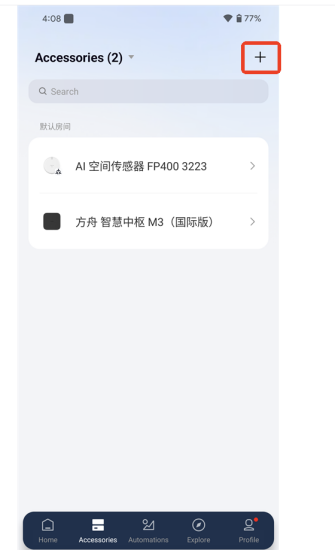
① top-right “+”
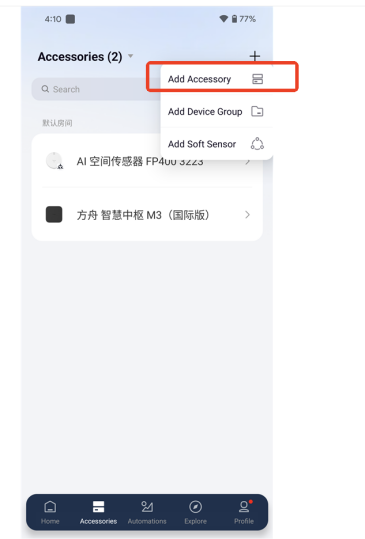
② Add Accessory
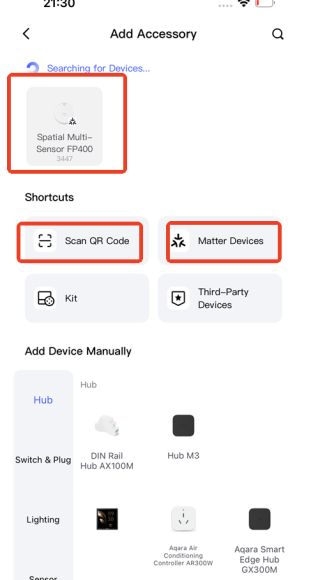
③ Scan / enter Matter pairing code
4. Step 2 · Generate the Matter sharing pairing code (common to all platforms)
In Aqara Home, open the FP400’s device plugin page and generate the Matter pairing code used to share the device to third-party platforms.
- Open the FP400 device plugin page and tap “…” at the top-right.
- Tap “Matter”.
- Tap “Matter Pairing Code” to generate a new pairing code.
- Tap “Copy pairing code” to copy it, or “Save QR code” to save the QR image, for use on the third-party platform later.
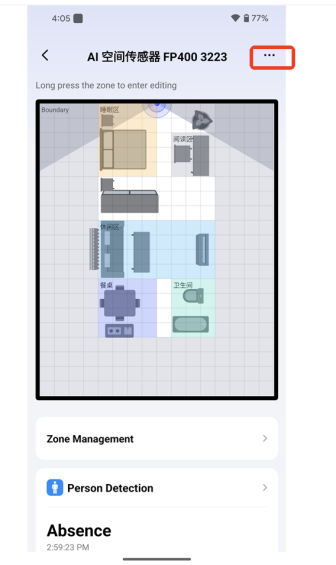
① device page top-right “…”
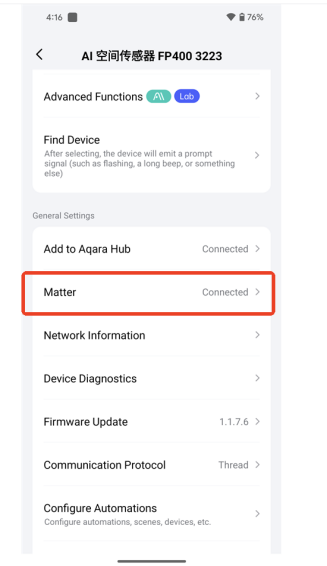
② tap “Matter”
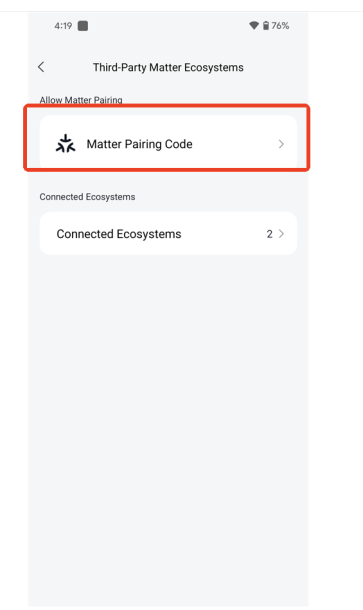
③ generate Matter Pairing Code

④ copy pairing code / save QR
Apple Home users can skip copying the code: the Matter sharing page above shows an Apple Home “Connect” button directly, so you can share to Apple Home in one tap — see 5.1.
5. Per-platform pairing steps
5.1 Apple Home (most complete support)
Prerequisites: iPhone/iPad running iOS 16.5 or later; a HomePod mini / HomePod / Apple TV 4K set up as the home hub and Thread Border Router; the FP400 already added to Aqara Home with its zones configured (steps 3–4).
- On the Aqara Home Matter sharing page, tap “Connect” in the Apple Home row.
- Choose the home where the HomePod / Apple TV is located, tap “Continue”, and wait for it to be added.
- Choose the device’s room, tap “Continue” repeatedly, then tap “Done”.
- Open the Apple Home app, tap “…” at the top-right, and select the home and room you set in Aqara Home to see the FP400.
- Tap “Occupancy” to view the individual zones; each Monitoring Zone appears as an independent occupancy sensor you can use in automations.
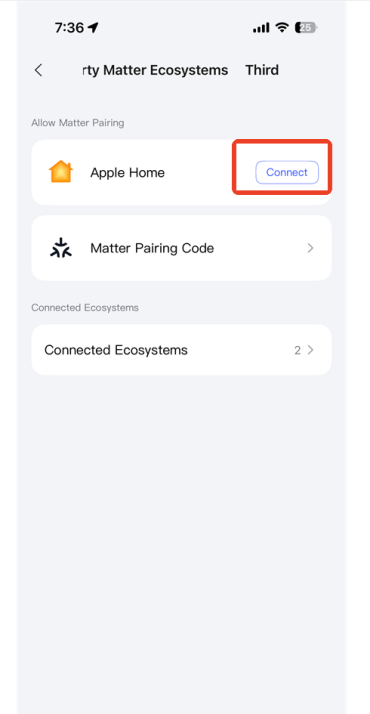
Tap Apple Home “Connect”
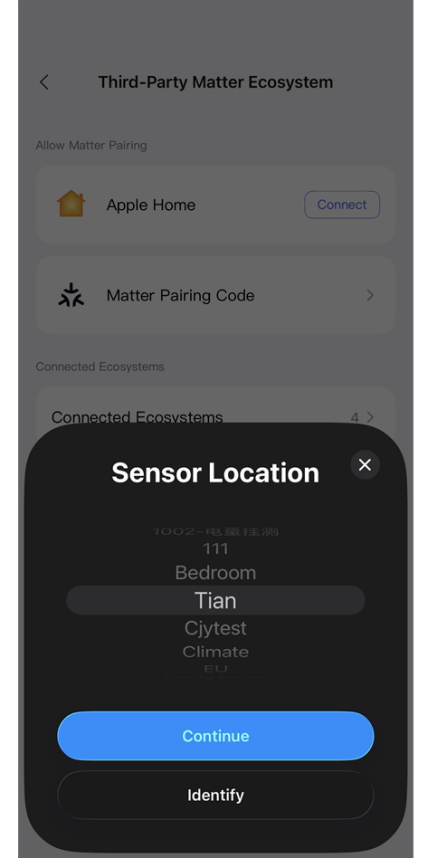
Choose home & room
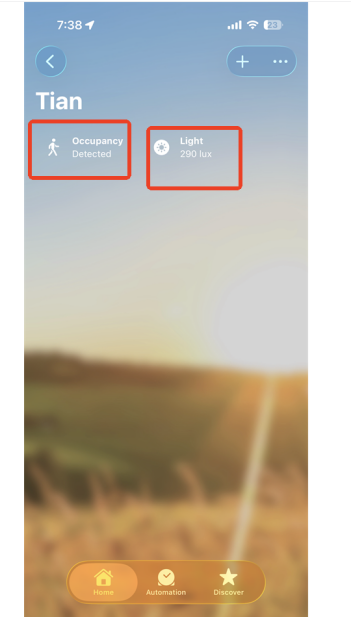
FP400 in the Home app
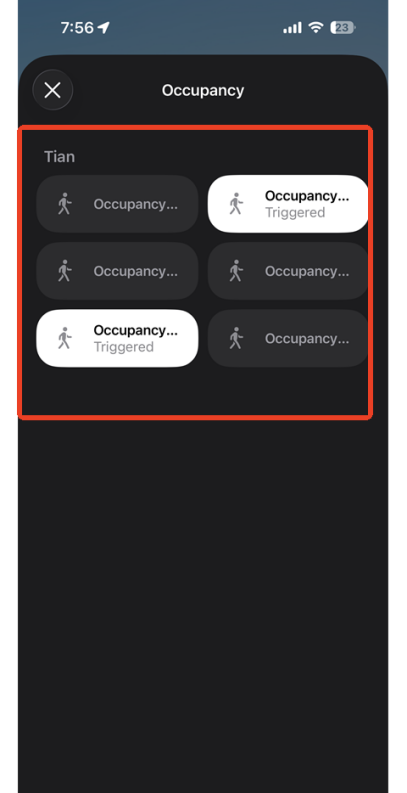
View zones via Occupancy
Note: Apple Home has the most complete support — all zones and illuminance work normally in automations.
5.2 Google Home
Prerequisites: Android 8.1+ or iOS 16.5+; the Google Home app installed and signed in; a compatible Thread Border Router configured in the home (Nest Hub 2nd gen, Nest Wi-Fi Pro, Nest Hub Max, etc.); Google Play services updated on Android. The FP400 has completed steps 3–4.
- Open the Google Home app, tap “+” at the top-right, then tap “Device”; if a prompt appears, tap “x” at the top-left or “Add a different way”.
- In the search box at the top, type “FP400” and select “Aqara Spatial Multi-Sensor FP400”.
- Tap “Use pairing code”, enter the code you copied in step 2, then tap “Continue”.
- Tap “Agree”, then “I’m ready”; wait for discovery, connection, and network setup, then tap “Done”.
- You will then see each Monitoring Zone card and the illuminance card.
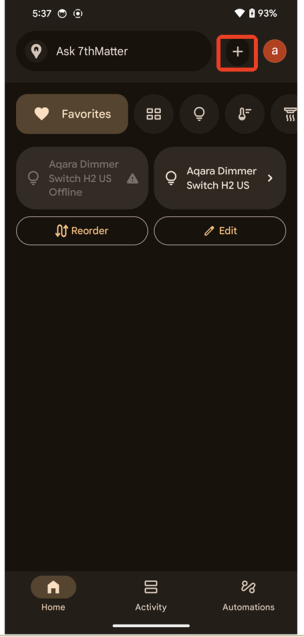
① top-right “+”
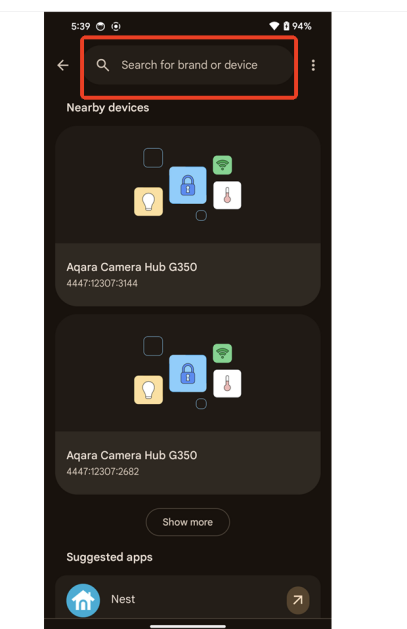
② search & select FP400
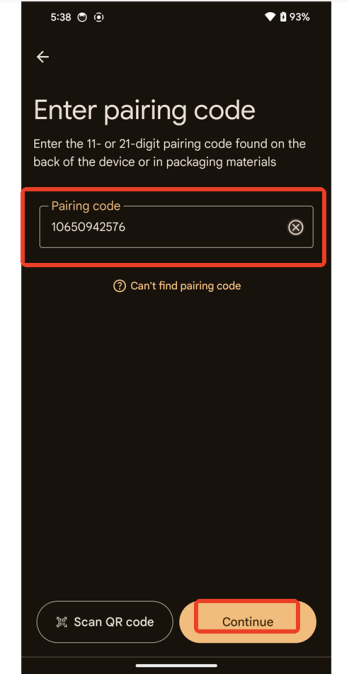
③ enter code → Continue
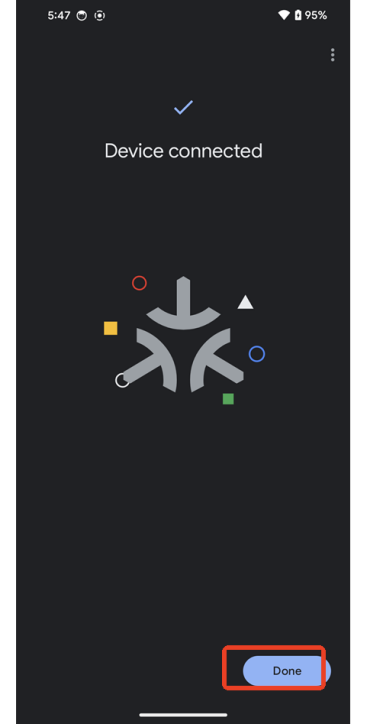
④ connected → Done
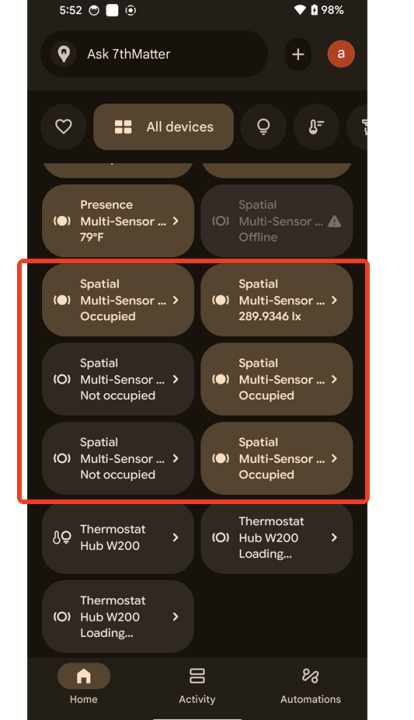
⑤ zone cards
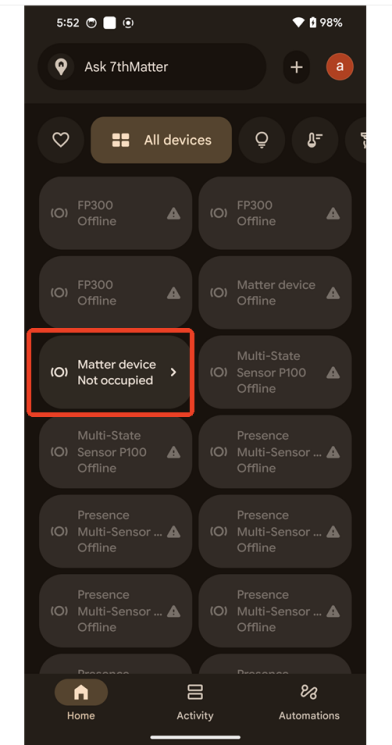
⑥ illuminance card
Known limitation: Google Home does not support illuminance-based automations; zone names do not sync automatically, so rename them manually in Google Home to match their real locations.
5.3 Amazon Alexa
Prerequisites: a recent Alexa app; a Matter-compatible hub in the home (Echo 4th gen, Echo Dot 5th gen, Echo Studio, Echo Show series, or a compatible eero router); Alexa devices and your phone on the same Wi-Fi. The FP400 has completed steps 3–4.
- Open the Alexa app, tap “Devices” at the bottom, then tap “+” at the top-right > “Add Device”, and choose “Matter”.
- On the confirmation page tap “Yes”, then “Try Numeric Code Instead”, then “Enter Code”.
- Enter the code you copied in step 2, tap “Next”; once connected, tap “Next” again.
- On the device-selection page: “Aqara Spatial Multi-Sensor FP400” is the main device, “Sixth light sensor” is the illuminance card, and each “xxx motion sensor” is the occupied/unoccupied card for a Monitoring Zone (where “Sixth motion sensor” represents whole-space occupancy). Select each card one by one, tapping “Set Up Device” for each.
- Assign a room (where) and rename each card as needed (you must select a room and rename before “Next” works; tap “X” at the top-right to skip changes), then tap “Done”.
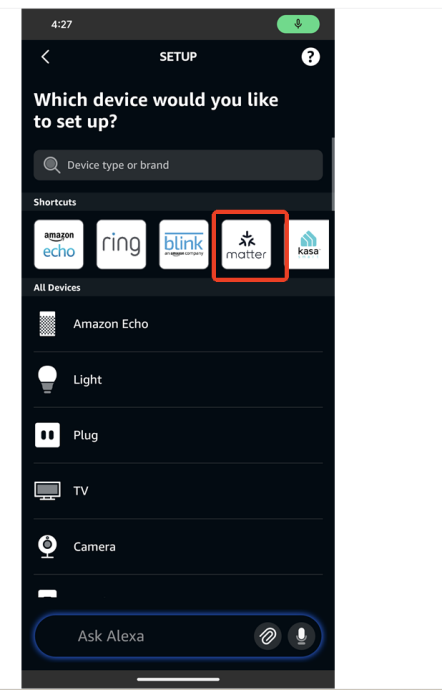
① choose “Matter”
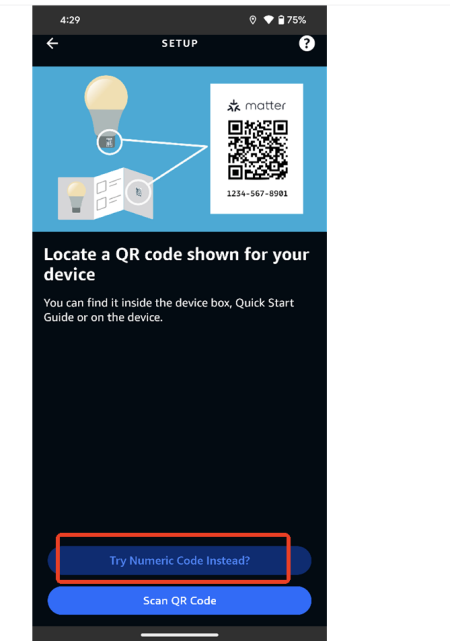
② Try Numeric Code
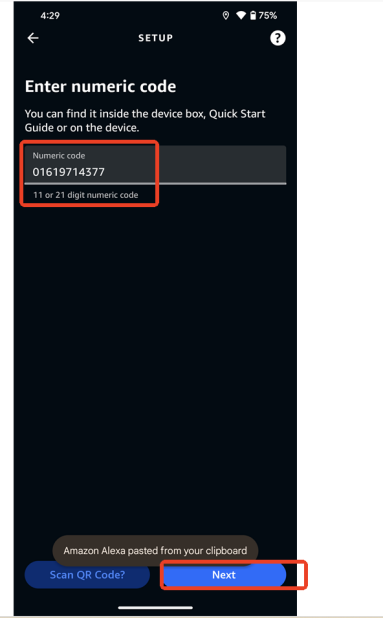
③ enter code → Next
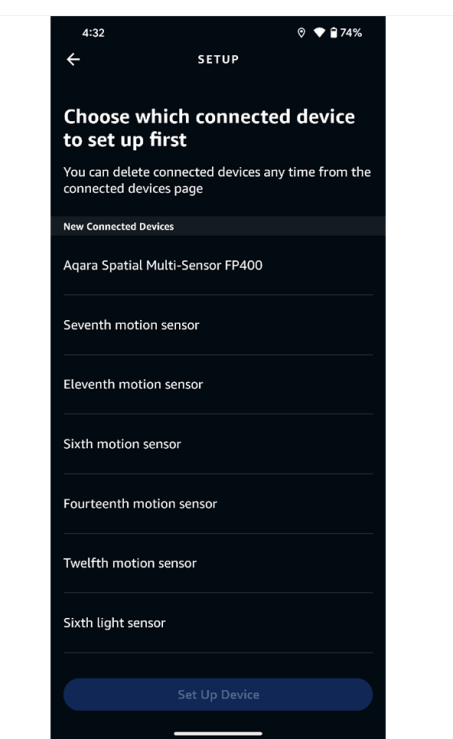
④ select zone / illuminance cards
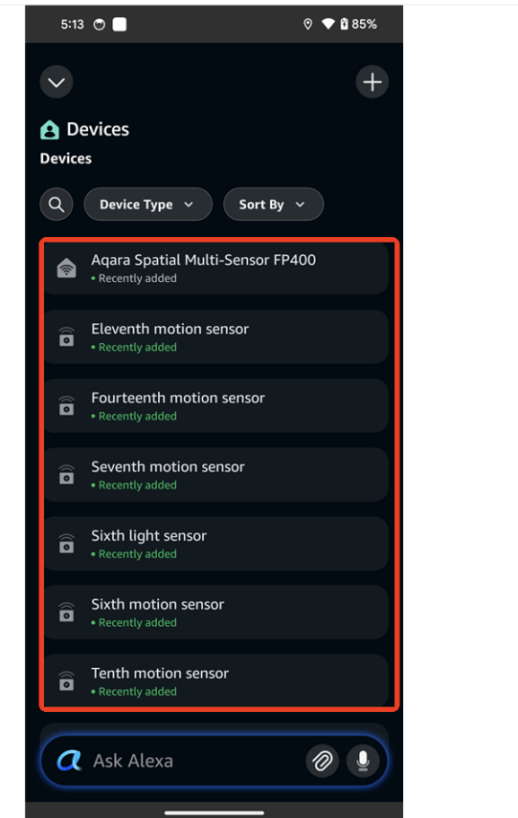
⑤ finished device list
Known limitation: Alexa does not support illuminance automations; zone names and zone add/delete do not sync automatically, so handle them manually in Alexa. Keep your Echo device firmware up to date for the best Matter support.
5.4 Samsung SmartThings
Prerequisites: the SmartThings app installed and signed in; a SmartThings Matter hub in the home (Aeotec Smart Home Hub, SmartThings Station, or a Samsung TV/monitor/fridge with a built-in hub); phone and device on the same Wi-Fi. The FP400 has completed steps 3–4.
- Open the SmartThings app, tap “+” at the top-right > “Add device”.
- Tap “Scan QR code” and scan the Matter pairing QR you saved in step 2; wait for the device to connect.
- Once connected, you enter the configuration page (adjust parameters as needed); tap “Done” and wait for the plugin to finish downloading.
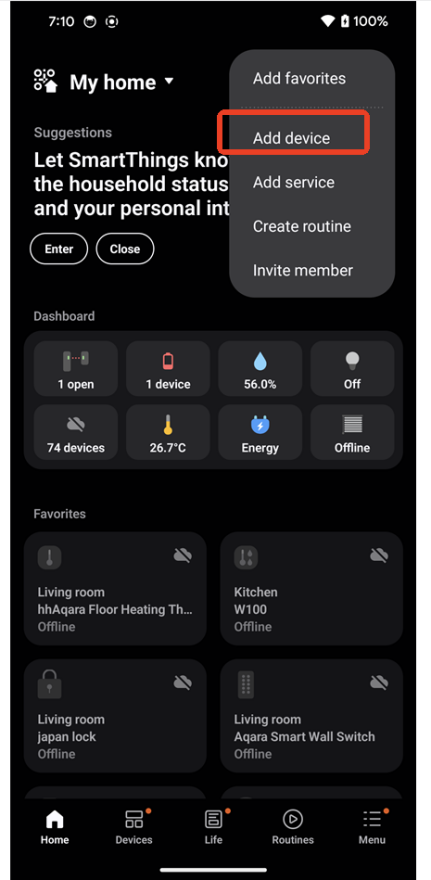
① Add device
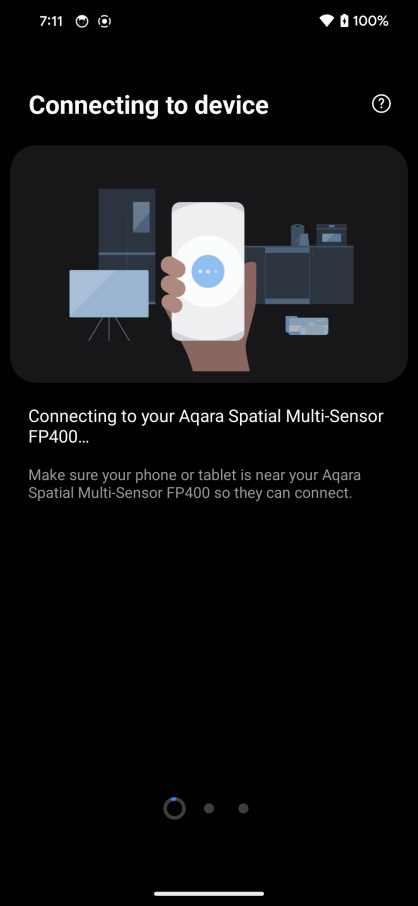
② scan code & connect
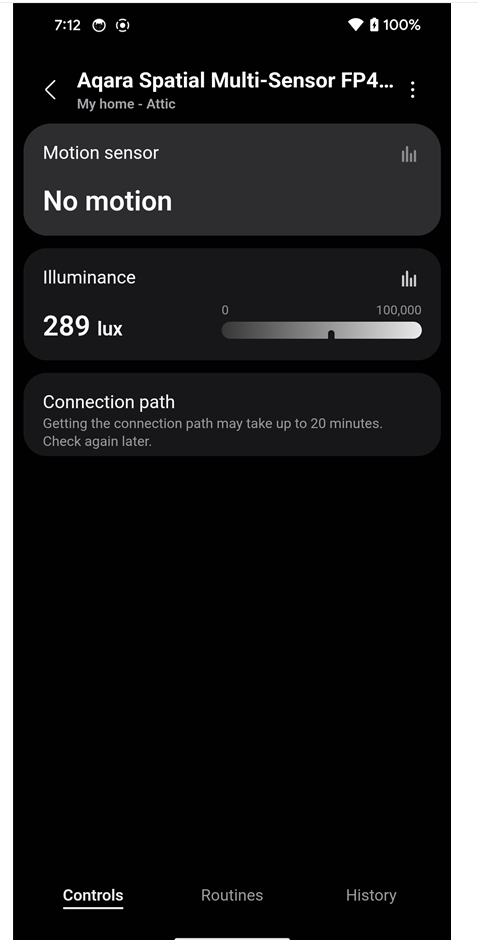
③ plugin downloaded
Known limitation: SmartThings now displays each Monitoring Zone as multiple occupancy sensors and supports zone-based automations; however, zone names and zone add/delete do not sync automatically, so rename them manually in SmartThings to match their real locations. Plan the zones and their names in Aqara Home before sharing.
5.5 Homey
Prerequisites: Homey Pro (2023) or Homey Pro Mini; Homey firmware v10.3.0+ and Homey app v7.1.0+; phone running iOS 16.5+ or Android 8+. The FP400 has completed steps 3–4.
- Open the Homey app, tap “Devices” at the bottom, then tap “+” at the top-right > “New Device”, and choose “Matter” under technologies.
- Tap “Connect via Homey” (recommended, uses Homey’s Thread network), then “continue”.
- Enter the code you copied in step 2 (or scan the QR), tap the arrow, and wait for the device to connect.
- Once connected, tap “Continue Setup →”, then “finish”, then “got it”.
- Long-press a card under “Devices” to view the device details and each capability, which you can use directly in Homey Flows.
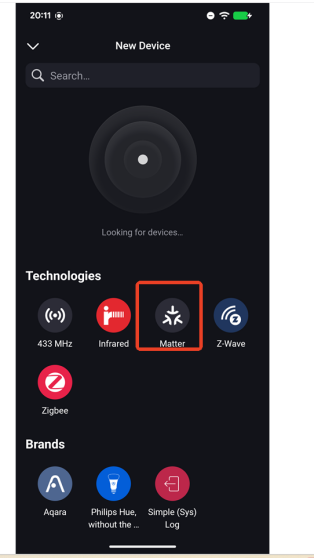
① choose “Matter”
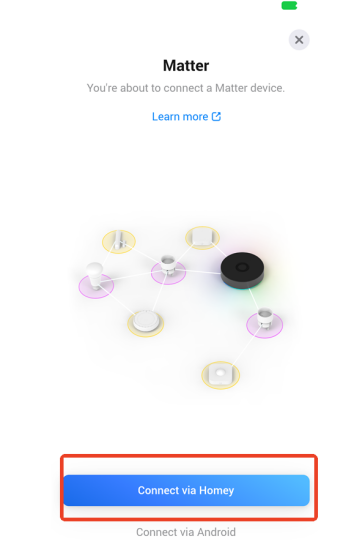
② Connect via Homey
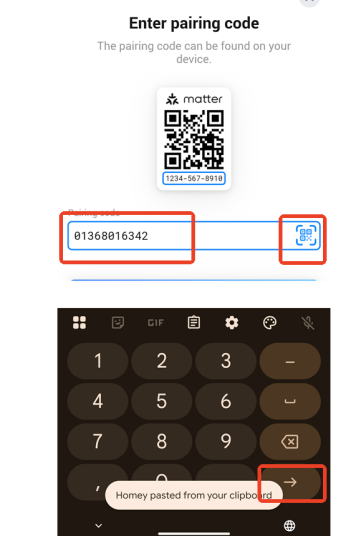
③ enter code
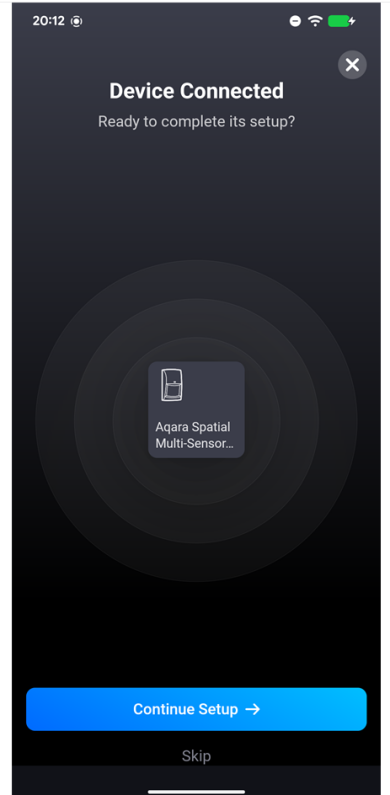
④ connected
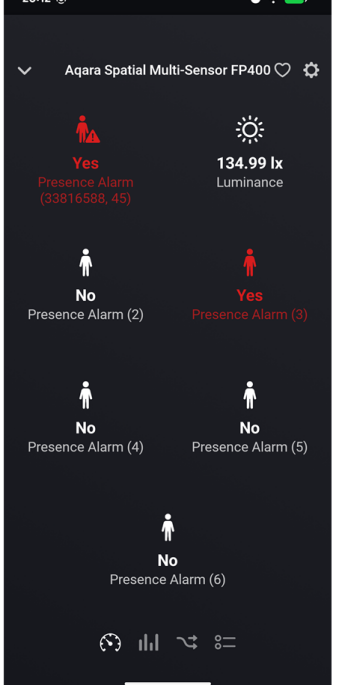
⑤ long-press card for details
Known limitation: In Homey the zones are named “Presence Alarm”, “Presence Alarm(1)”, “Presence Alarm(2)”… and cannot be customized. Using Homey together with Aqara Home is recommended.
5.6 Home Assistant
Prerequisites: a recent stable Home Assistant with the Matter integration installed and a Matter Server running; a Thread Border Router configured; the Home Assistant Companion app installed. The FP400 has completed steps 3–4.
- In the Companion app, tap the top-left menu > “Settings” > “Devices & services”.
- Tap “Devices”, then “ADD DEVICE” > “Add Matter device”, and choose “No, it’s new”.
- Choose “Set up without QR code”, enter the code you copied in step 2, tap the arrow, then “I’m ready”; wait for the device to connect.
- Once connected, each “Occupancy” entity represents a zone: “Detected” means the zone is occupied, “Clear” means unoccupied.
- To find the device later, type “FP400” in the “Devices” search box to see every FP400 added to this ecosystem.
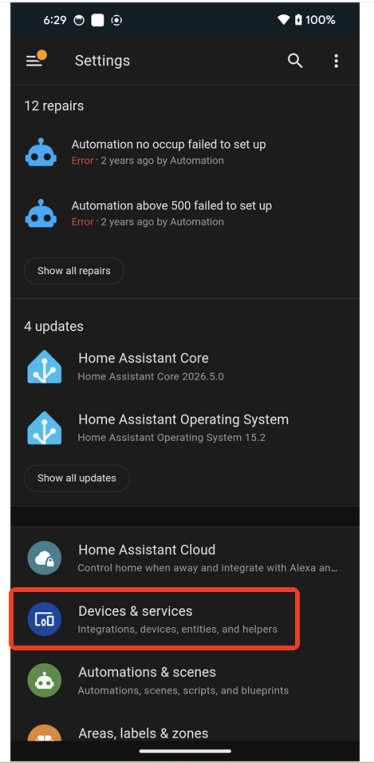
① Devices & services
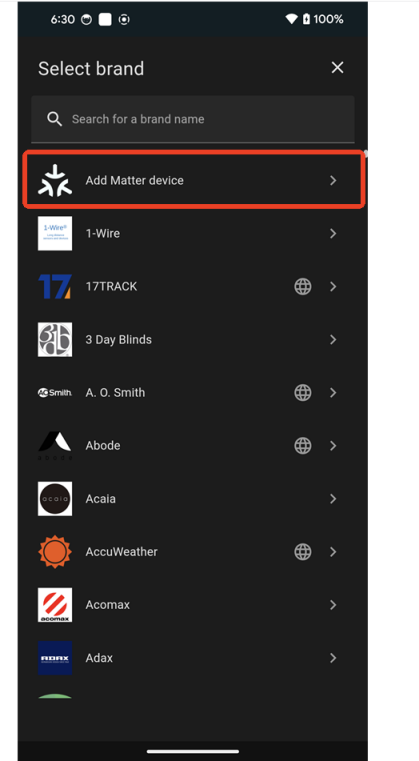
② Add Matter device
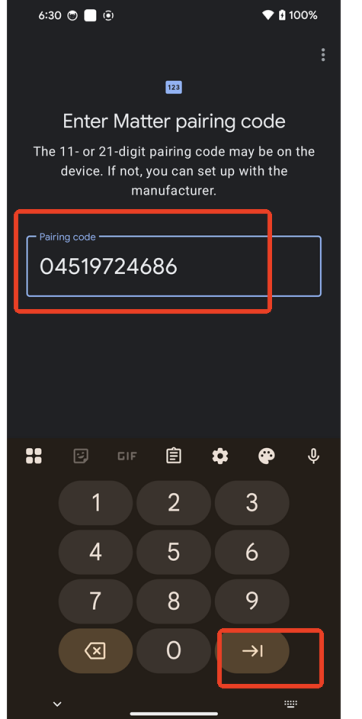
③ enter code
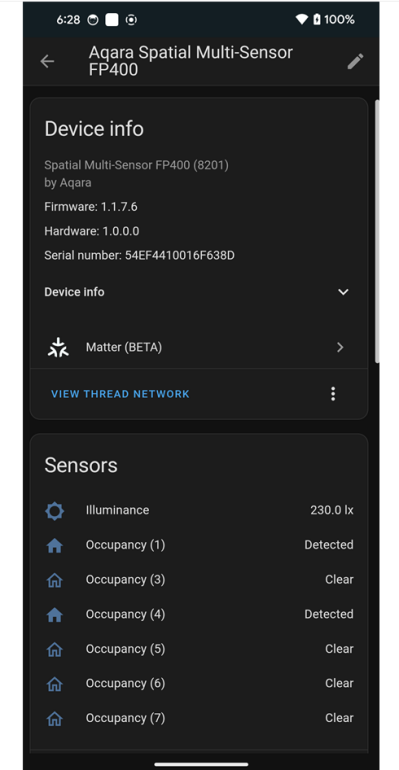
④ Occupancy zone entities
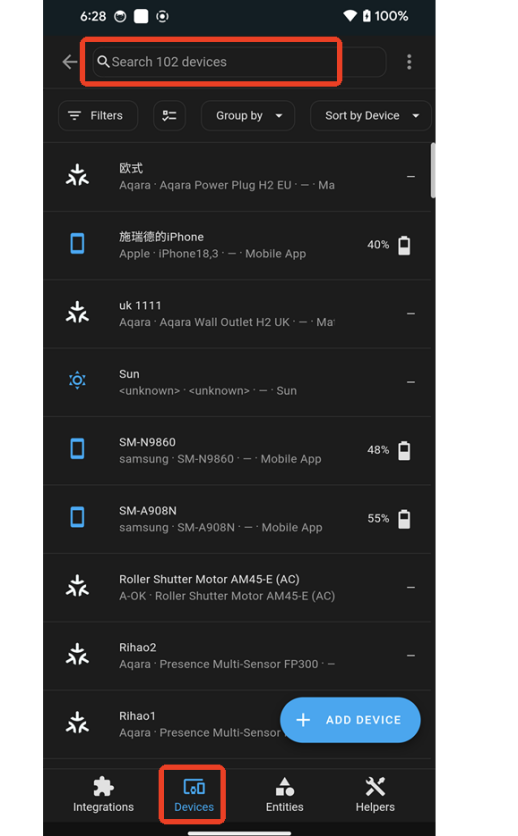
⑤ search FP400
Note: Home Assistant is fully supported and lets you adjust detection sensitivity, the Absence Confirmation Period, and other parameters on the platform side. Zone names do not sync automatically — rename them manually in Home Assistant.
6. Feature support by access method and platform
The FP400 (firmware Thread v1.1.9.6+ / Zigbee v0060+) supports different features depending on how it is connected. The first table compares the main features and configuration items across access methods; the second summarizes per-platform support for third-party Matter platforms.
6.1 Feature support by access method
Columns ① – ② are configuration done in the Aqara Home app; columns ③ – ⑤ are third-party Matter platform access methods.
| Feature / configuration item | ① Thread (default firmware) + Aqara Matter hub (recommended) | ② Zigbee protocol + Aqara hub | ③ Thread + Aqara Matter hub (recommended), configured in Aqara Home then shared via QR | ④ Thread, no Aqara hub, Matter Controller direct, configured in Aqara Home then shared | ⑤ Scan the body Matter code directly (limited, not recommended) |
|---|---|---|---|---|---|
| Whole-Area Presence Detection |  |
|
|
|
|
| Real-time Positioning Map | |
|
 |
|
|
| Zone Presence Detection (up to 8 custom zones) | |
|
|
|
Not supported |
| Ambient Light Detection | |
|
¹ |
¹ |
¹ |
| Real-Time Headcount | |
|
|
|
|
| AI High-precision Human Recognition | |
|
|
|
|
| Zone Management | |
|
|
|
|
| Absence Confirmation Period | |
|
|
|
only Home Assistant |
| Presence Detection Sensitivity Setting | |
|
|
|
only Home Assistant |
¹ Google Home & Alexa: no illuminance automation.
6.2 Per-platform support for third-party Matter platforms
Legend: = supported, — = not supported.
| Third-party platform | 8 custom zones | Zone name sync | Zone add/delete sync | Illuminance automation |
|---|---|---|---|---|
| Apple Home | |
|
|
|
| Home Assistant | |
— | — | |
| Homey | |
— | |
|
| Google Home | |
— | |
— |
| Amazon Alexa | |
— | — | — |
| Samsung SmartThings | |
— | — | |
Features available only in Aqara Home (not on third-party platforms): the real-time location map, Real-Time People Count, all data history curves, and Aqara automations are provided only within Aqara Home and are not synced to third-party Matter platforms.
Best practice: connect the FP400 to the Aqara Home app over Matter (Thread), finish all zone division and configuration in the Aqara Home app, then scan the Matter sharing code provided by the Aqara Home app to bring the device into third-party Matter platforms. The specific features supported and the experience may change as third-party platforms update.
7. FAQ
Q1: Scanning the QR code on the device body / in the manual only shows one sensor?
This is normal. Scanning the original Matter code directly with a third-party app brings the FP400 online only as 1 occupancy sensor + 1 illuminance sensor, with no zoning. Follow the “add to Aqara Home, configure zones, then share” flow described in this guide.
Q2: Pairing fails when adding the second platform?
Use the “secondary Matter pairing code” generated in Aqara Home. Do not repeatedly reuse the original QR code on the device body or in the manual — reusing it will fail.
Q3: Zone names are confusing or indistinguishable on a third-party platform?
Apart from Apple Home, most platforms do not sync zone names automatically. Plan your zones in Aqara Home first, then manually rename the corresponding occupancy sensors on the third-party platform to tell locations apart.
Q4: On SmartThings the zones show up, but the names don’t match?
SmartThings now displays each Monitoring Zone as multiple occupancy sensors, but because of the current state of the third-party app’s feature development, zone names and zone add/delete are not yet synced automatically. Plan your zones in Aqara Home first, then manually rename the corresponding occupancy sensors in SmartThings to tell locations apart.
Q5: Cannot pair, or the device is unresponsive?
- Confirm you are using a standard 5V 1A DC power supply and that the LED responds normally when powered on.
- Press and hold the reset button for 5 seconds to enter pairing mode (blue slow/fast blink).
- Move the device closer to your Thread Border Router (such as a HomePod mini), shorten the distance, and confirm it is online.
- If it still fails, quickly press the reset button 10 times to restore factory settings, then try again.
The FP400 supports Zigbee and Thread and the features are the same; Product features are subject to the actual behavior in Aqara Home; because of protocol and third-party Matter implementation limits, features may differ across platforms.

