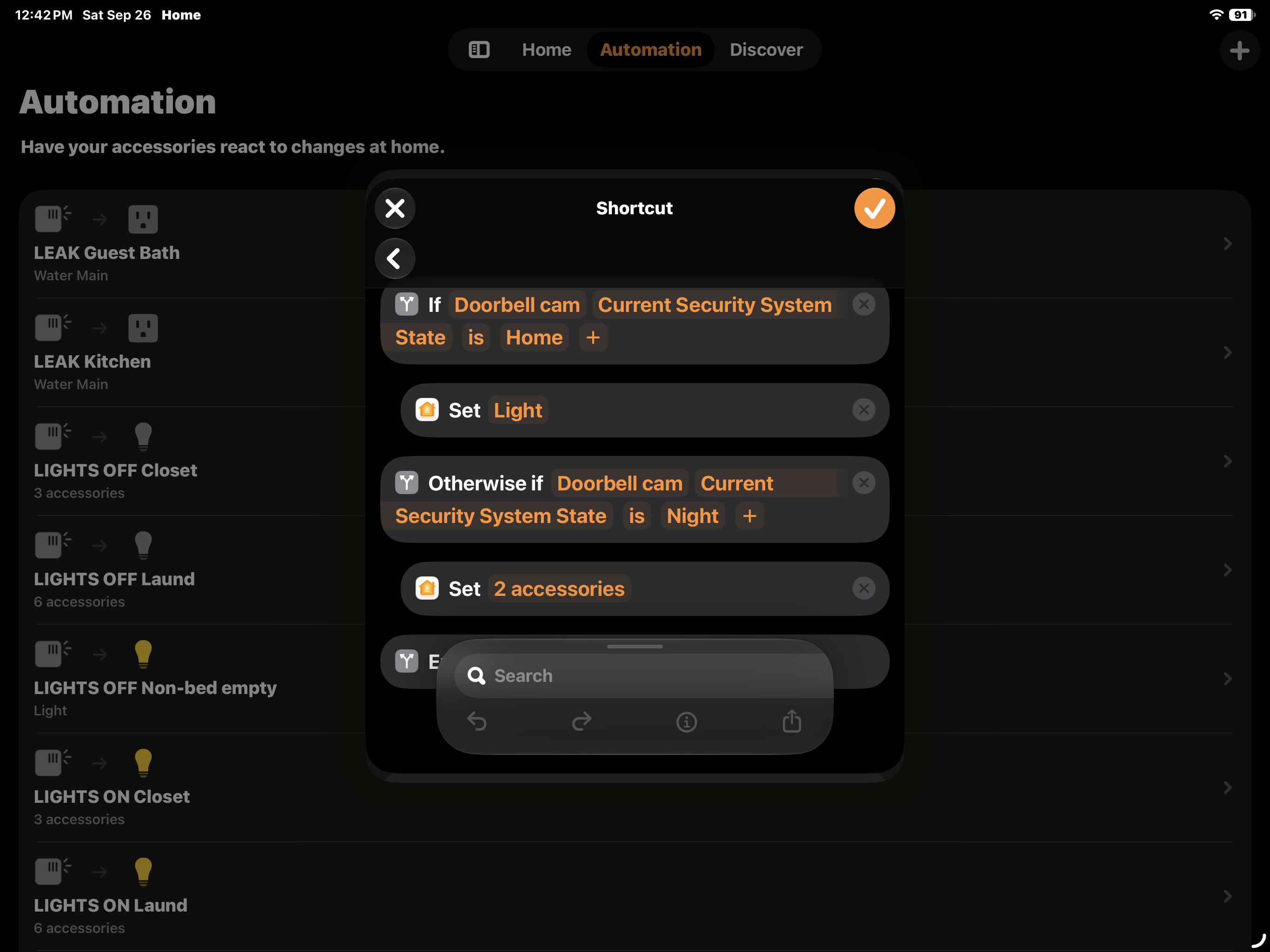
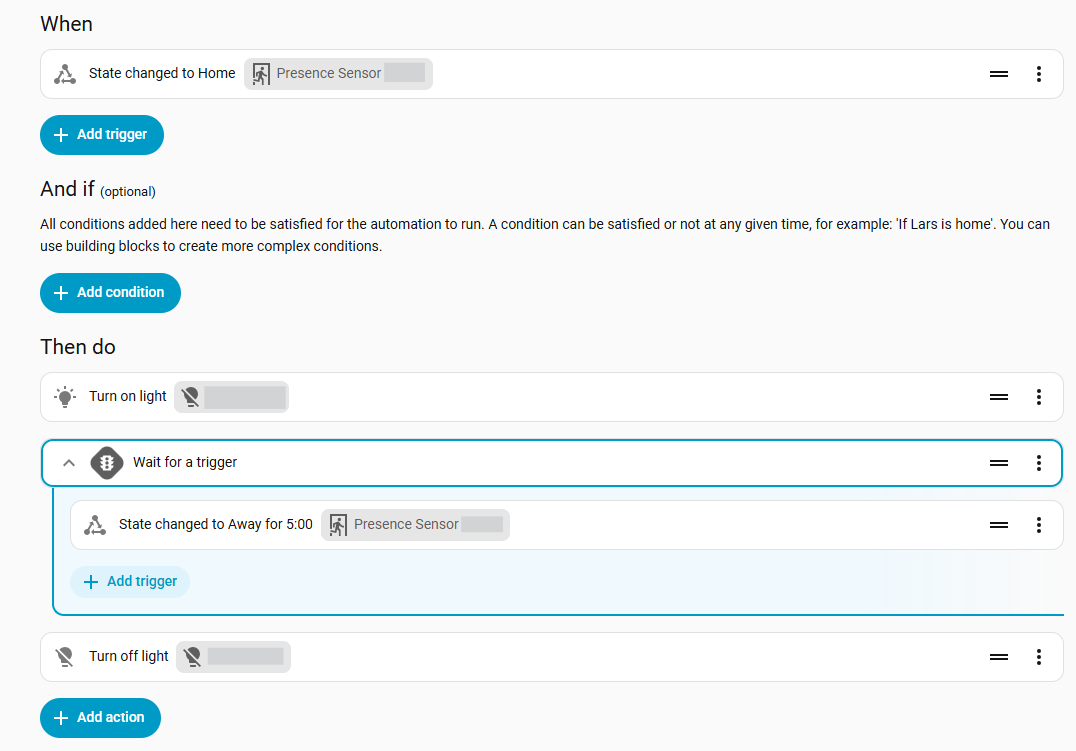
I’ve been running a fairly extensive Aqara setup for a while now and I’m hoping to pick your brains for some inspiration on Apple Shortcuts and cross-ecosystem automations that go beyond what the Aqara app offers on its own.
My current setup:
About 10 cameras, some of which can pan/rotate, and a few where I manually or on a schedule disable night vision
Smart smoke detectors in every room (a couple of them are a bit trigger-happy with false alarms)
Where I’m stuck:
The bathroom is still giving me headaches. The standard motion sensor is really only designed for brief presence, and the presence sensor has simply never worked reliably for me. What I actually need is something closer to a dedicated “toilet” or “shower” sensor (yes, I said it ) — something that can reliably tell whether someone is still in there for longer stretches, without the usual timeout issues.
What I’m really after: Beyond individual sensor fixes, I’d love to hear how others are using Shortcuts to tie things together across ecosystems — actions that pull in more than just Aqara/HomeKit and actually make the whole smart home feel more integrated and “smart” as a system, not just a collection of separate gadgets.
Would really appreciate any Shortcuts recipes, automation logic, or hardware workarounds you’ve found useful — especially for the bathroom presence issue!
For the bathroom, I would separate “entered” from “still occupied”: motion starts a timed occupancy state, a shower humidity rise or a manual occupied scene extends it, and an exit/quiet condition clears it after a delay. Add a maximum timeout so it cannot stick forever, and log sensor events first to see whether detection or clearing is failing. Keep smoke alerts independent of this comfort automation. Which presence sensor model is missing stationary occupants, and does it fail during showers or while sitting still?
Then combine the presence sensor with the door sensor something like this:
a) WHEN → Presence detected → THEN → Scene: “Someone is in the bathroom”
b) WHEN → Door open → Within 30 sec → No Presence → Scene: “No one is in the bathroom” (under WHEN, change “Any Condition is Triggered” to “Trigger in sequence”)
Have you ever used Matter Signals in connection with collaboration between different ecosystems?
Fair point on the sequence logic, but the door state alone doesn’t really tell you anything on its own — you’d still need a second condition like “is showering” or “is on the toilet” to make it meaningful. And that’s exactly where it falls apart in practice: if you live alone, you don’t necessarily close the door at all. So the door-based approach doesn’t hold up against real-world usage in my case.
On Matter Signals — no hands-on experience yet on my end. Anyone have a YouTube video or other documentation they could point me to? Would love to actually see it in action before trying to build around it.
In that case, don’t use a door sensor; instead, use a second motion sensor outside the bathroom. For example, place the Aqara Motion Sensor P1 directly above the door.
On Matter Signals:
Do you have a specific idea of what you’d like to do?
Thanks for the detailed breakdown — that logic (separate “entered” vs. “still occupied” states, with a max timeout as a safety net) makes a lot of sense and is exactly the direction I want to go.
To answer your questions: the sensor is the GL.iNet Lafaer LWR01 (mmWave, Matter over Thread, rated IPX3 for bathroom use). It’s unreliable in both scenarios — sitting still and showering — which points more toward a general mmWave reflection/interference issue (steam, water, tiled walls) than a simple timeout problem. I don’t have a humidity sensor in the mix yet, so there’s no independent “shower is running” signal to fall back on.
One thing I should add for context: my actual bottleneck isn’t just this one sensor — it’s that I’m juggling too many separate ecosystems for automation. Ideally I’d run everything through Home Assistant, since it supports YAML and makes proper, version-controlled backups possible. But native Apple Home is too limited for what I need — there’s basically no way to set meaningful conditions/constraints on automations there. That’s why I’ve been looking at the Shortcuts app as a workaround/bridge, rather than buying yet another (pricey) sensor just so I can configure everything natively inside the Aqara app.
Follow-up questions:
Has anyone had better luck with mmWave presence sensors in bathrooms specifically, or is a humidity/shower-detection sensor basically mandatory to make this reliable?
Would love to see actual Shortcuts logic (screenshots or step breakdowns) for a layered “occupancy state machine” like the one described — motion starts it, humidity/manual trigger extends it, quiet period + max timeout clears it.
For anyone also juggling Aqara + Apple Home + other ecosystems: how are you bridging the “Apple Home has no conditions” gap? Shortcuts, a hub like Home Assistant, or something else entirely? Curious whether Shortcuts can realistically replace conditional logic that Home Assistant would otherwise give me natively.
Or, a slightly more complex approach using a timer (helper) that is reset repeatedly. But this actually makes more sense if you have multiple conditions or sensors that keep increasing the timer.
However, it still must be said that if the mmWave sensor is unreliable and doesn’t detect you for a longer period of time, a timeout will probably expire anyway. Does the sensor only fail to detect you for short intervals?
Honestly, I can’t say for sure — I haven’t had the sensor actively in use for a while, so I’d need to re-integrate it first to actually observe the failure pattern (short gaps vs. longer dropouts).
And yes, I’d definitely take you up on the offer for help with Home Assistant — that’s the direction I want to go long-term, so any pointers on structuring this properly from the start would be great. Later on.
Before buying another sensor, I would re-integrate the LWR01 and log its raw occupied/unoccupied changes during a few sitting and shower sessions. If it misses long stretches, a timer alone cannot recover that missing signal; a manual shower toggle could be a temporary hold without adding hardware. In Home Assistant, an occupancy helper plus a timer is a workable starting point: motion turns it on, each reliable presence event restarts the timer, and it clears after a quiet period unless the manual hold is active. Keep a separate maximum duration so a missed exit cannot leave it on indefinitely.
 ) — something that can reliably tell whether someone is still in there for longer stretches, without the usual timeout issues.