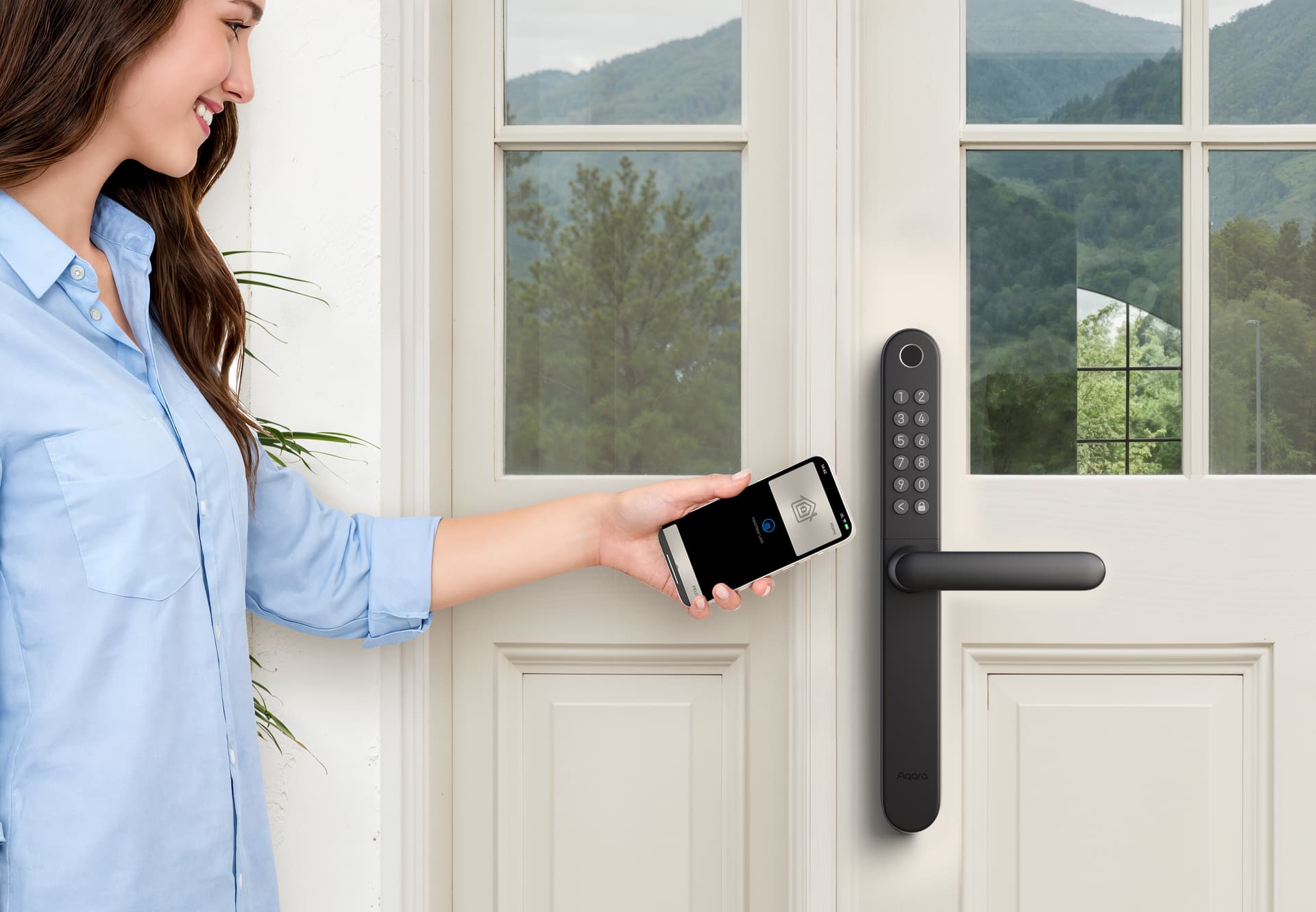
We’re getting ready to show the Aqara U600 smart lock at IFA, and as the product manager behind U600, I wanted to share a little bit about the thinking behind the product.
If you’re familiar with Aqara, you probably know that even before U600, the U200 could already be installed on many UK doors with multipoint locks.
The basic idea behind a retrofit lock is simple: keep the existing lock body and door handle, and use a motor to turn the existing cylinder, upgrading a traditional mechanical lock into a smart one.
The big advantage is that users don’t need to make major modifications to their doors, and installation remains relatively simple.
But as we spent more time testing and using on UK doors, we gradually ran into an important challenge:
UK multipoint locks can place much more complicated mechanical demands on a motor than a typical lock.
At the same time, we also noticed something very simple: UK users are already very familiar with using the door handle itself to operate the lock.
So when we started working on U600, we asked ourselves a different question:
If people are already used to operating a multipoint lock with the handle, why should the motor have to do all of the mechanical work?
That became one of the core ideas behind U600.
The U600 keeps the existing multipoint lock body, but instead of asking a motor to perform the entire unlocking action, it works with the way people already use their doors.
After the user authenticates with a fingerprint, PIN, Apple Home Key, or another supported method, then the user simply pushes the handle down to operate the existing lock mechanism and retract the latch.
It may sound like a small change, but it solves a very practical problem:
A human hand can naturally adapt to the very different mechanical resistance found across different doors and multipoint locks.
If a door is a little tight, you naturally apply a bit more force. If the door has shifted slightly over time, you instinctively adjust how you push or pull it while opening.
That’s difficult for a motor to do as naturally.
And this is really the core product logic behind U600:
Adapt to the user’s existing habits. Let the smart system decide who is allowed to open the door, and let the user perform the physical action of opening it.
That’s also one of my biggest takeaways from working on U600:
Good hardware design doesn’t always mean letting machines do everything.
Sometimes the better design is to let technology handle what it does best — identity verification, access management, and smart-home connectivity — while leaving the things humans already do very well to the user.