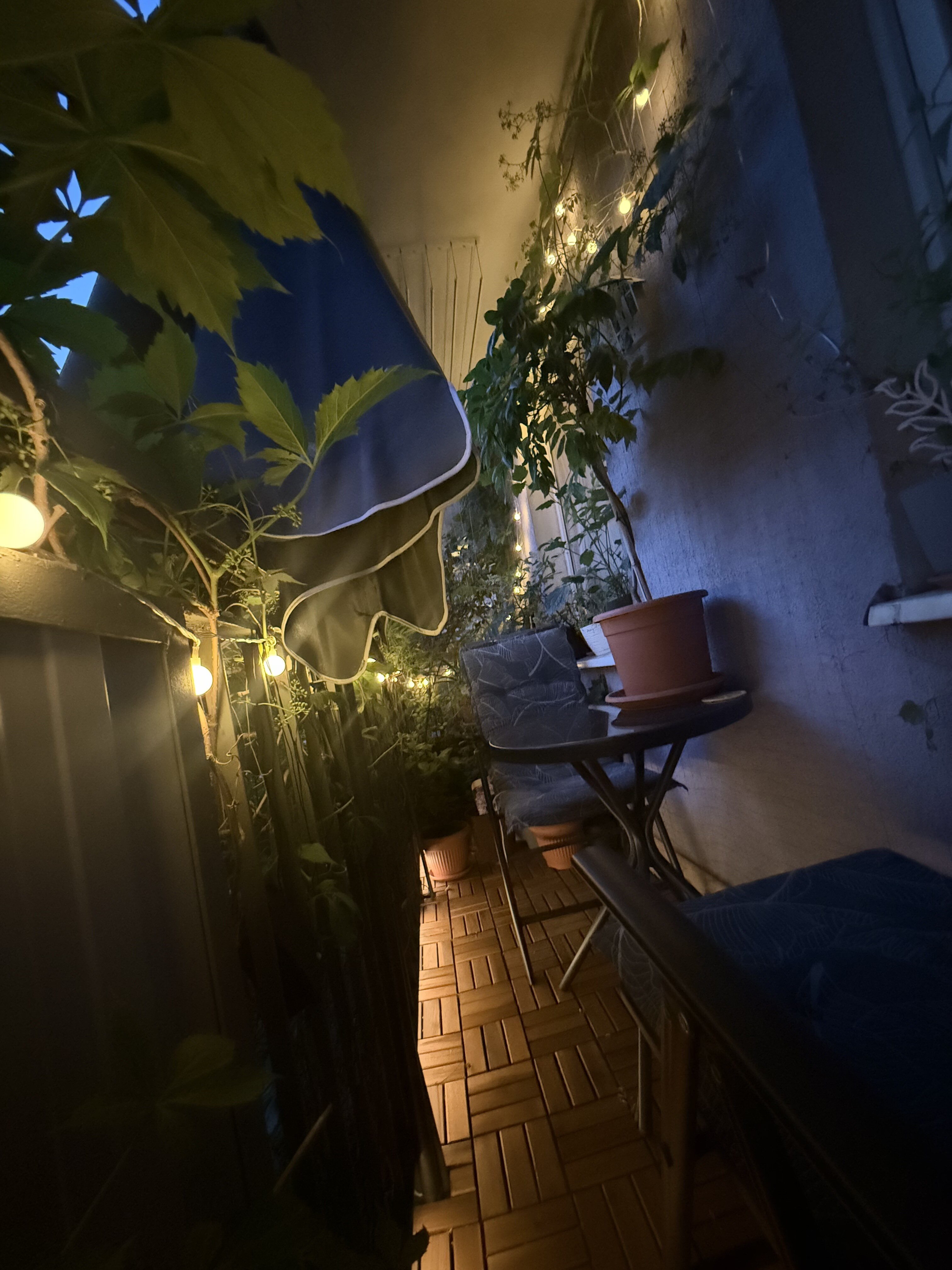
PREPARATIONS
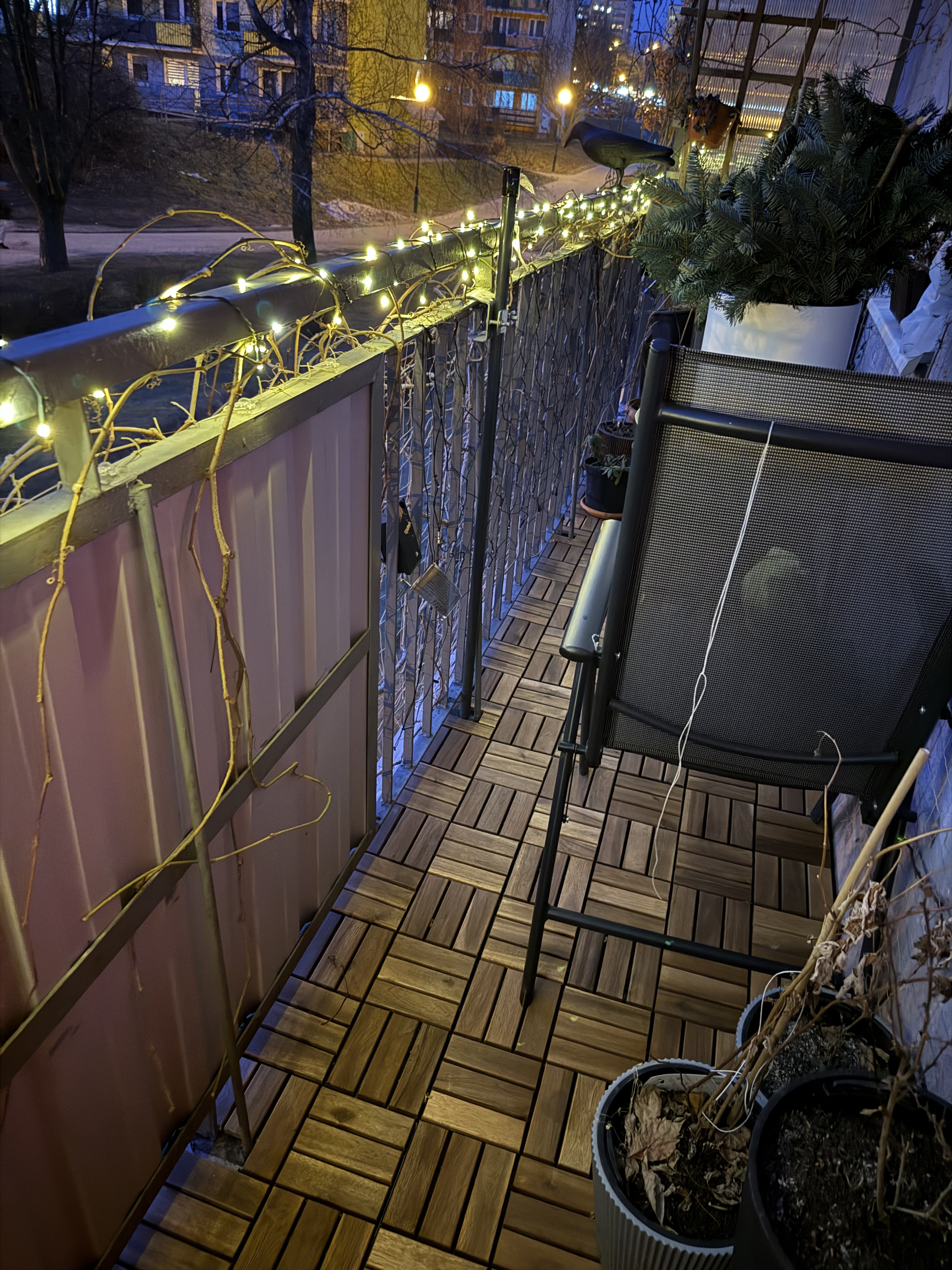
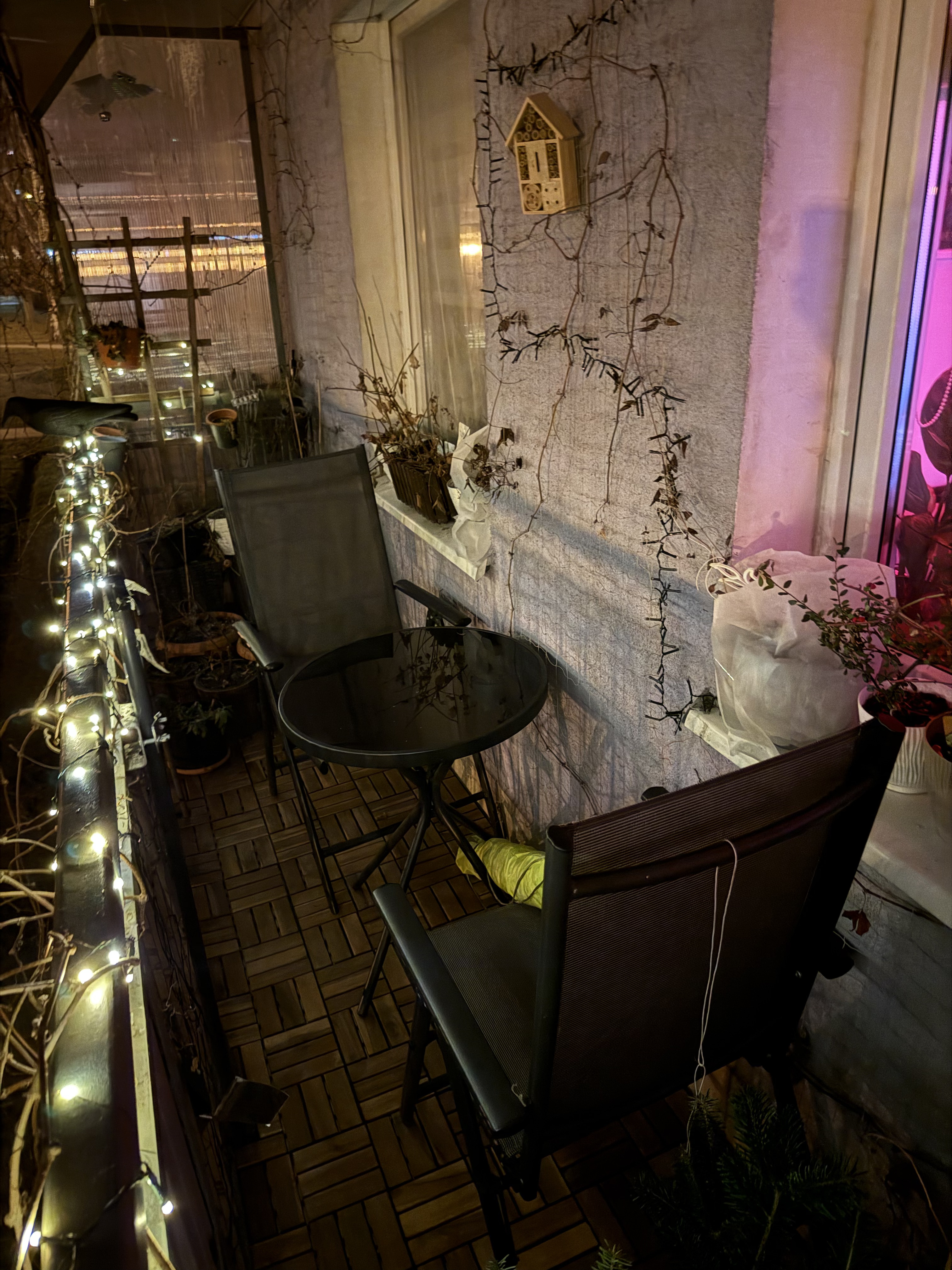
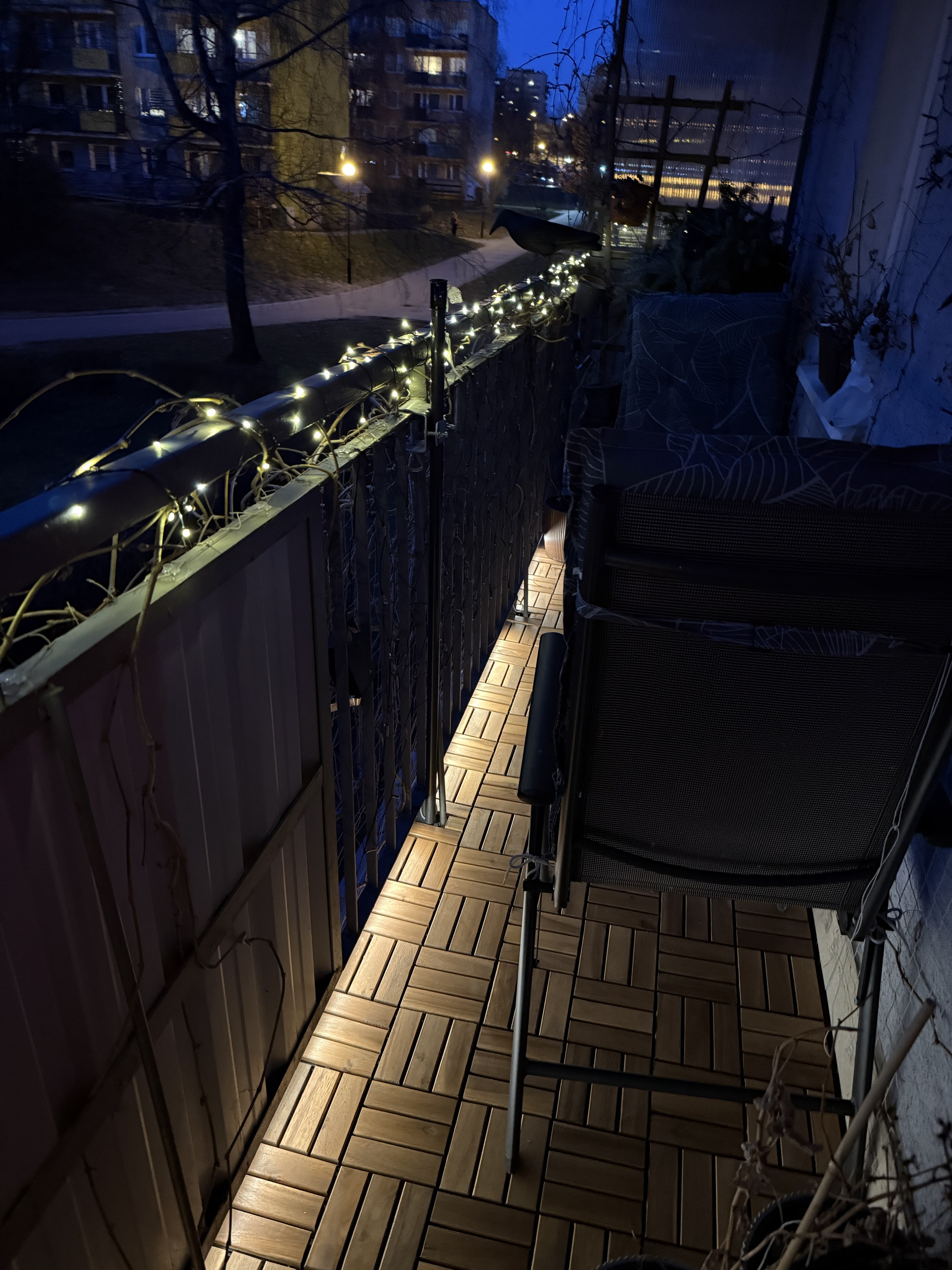
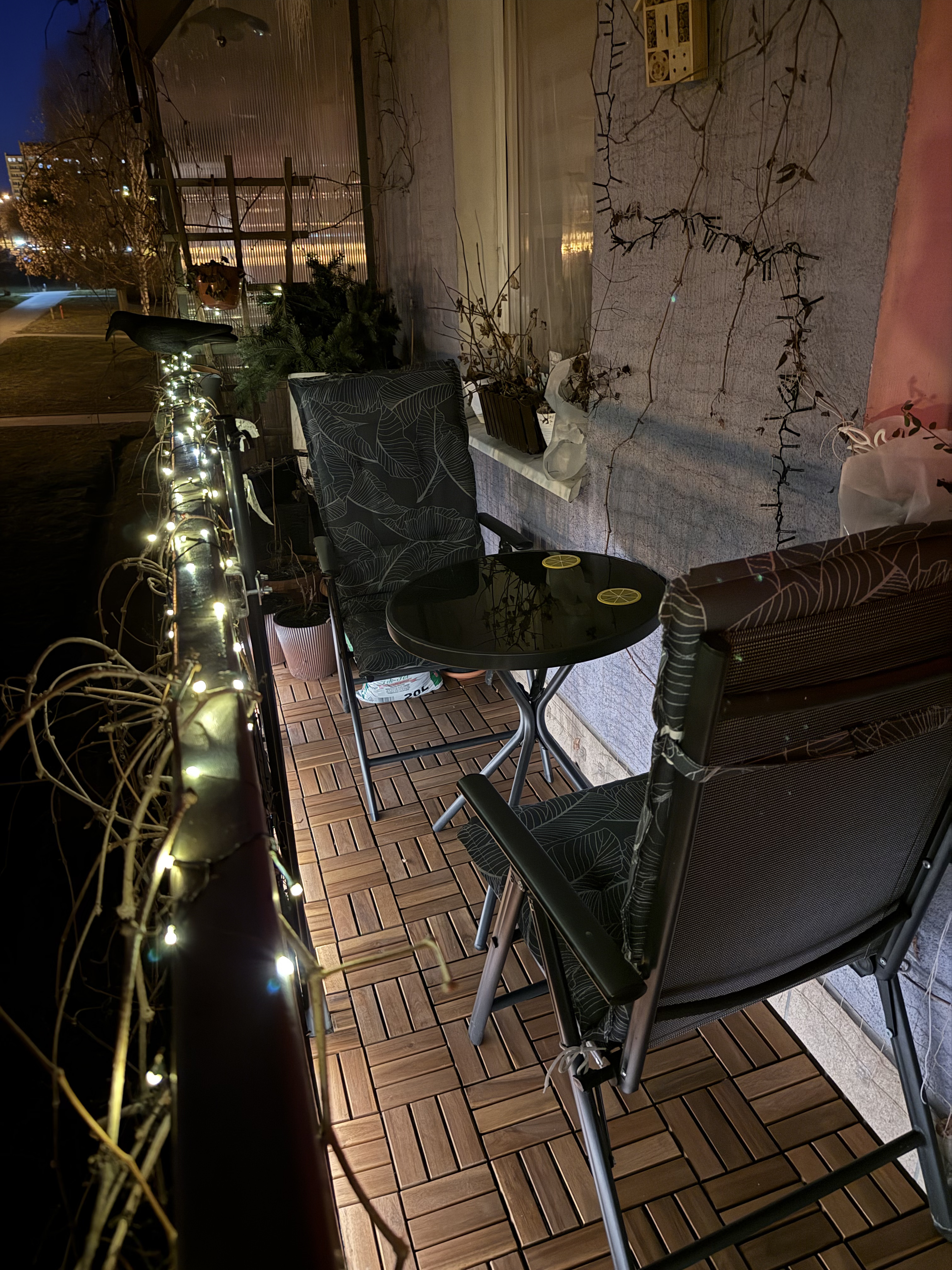
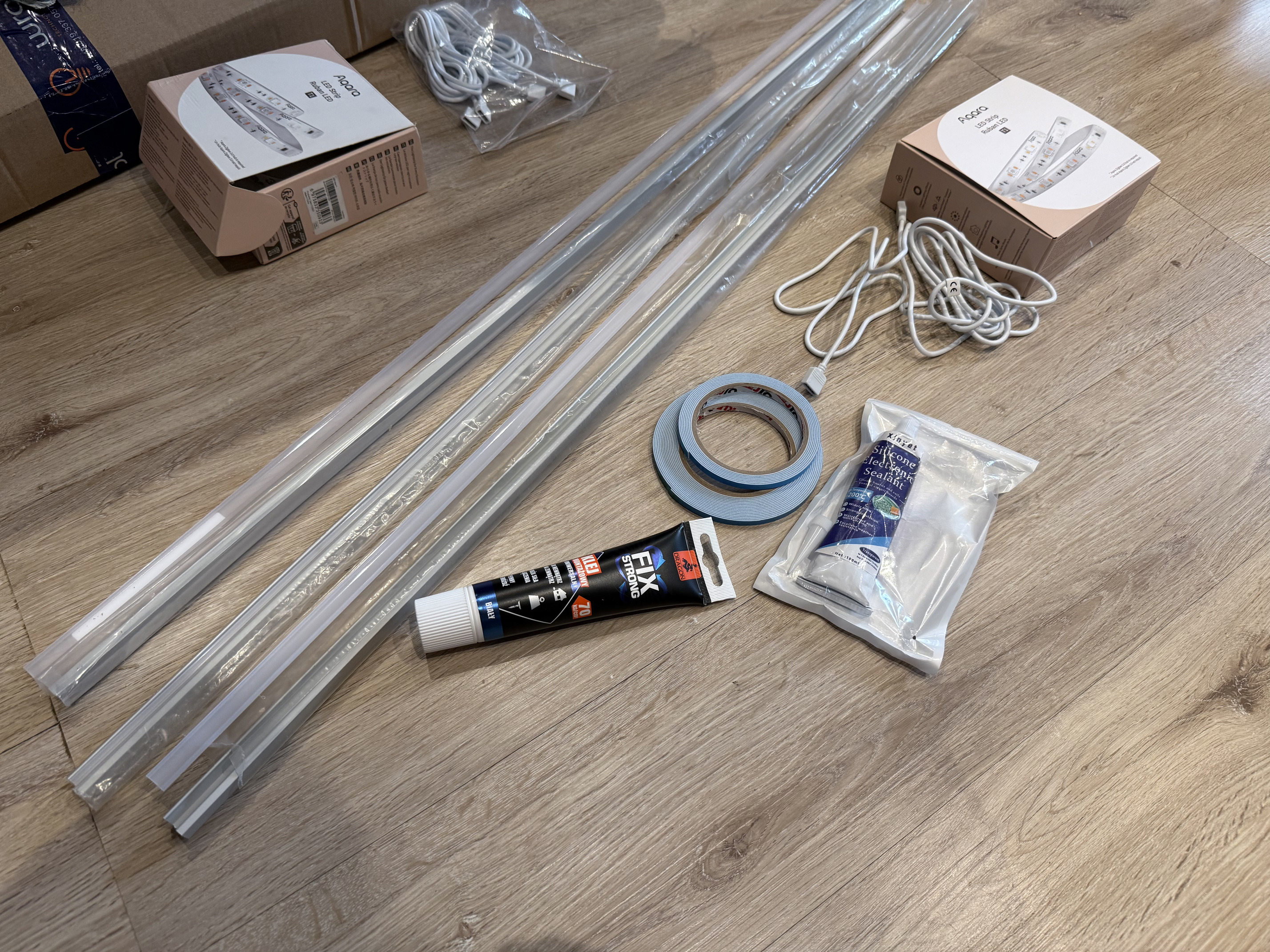
Before I started my work I made some photos of what I used for my little project.
What I used:
- Aqara LED Strip T1 (2m) + 2x 1m Extension (4m in total, but I only used 3.4m)
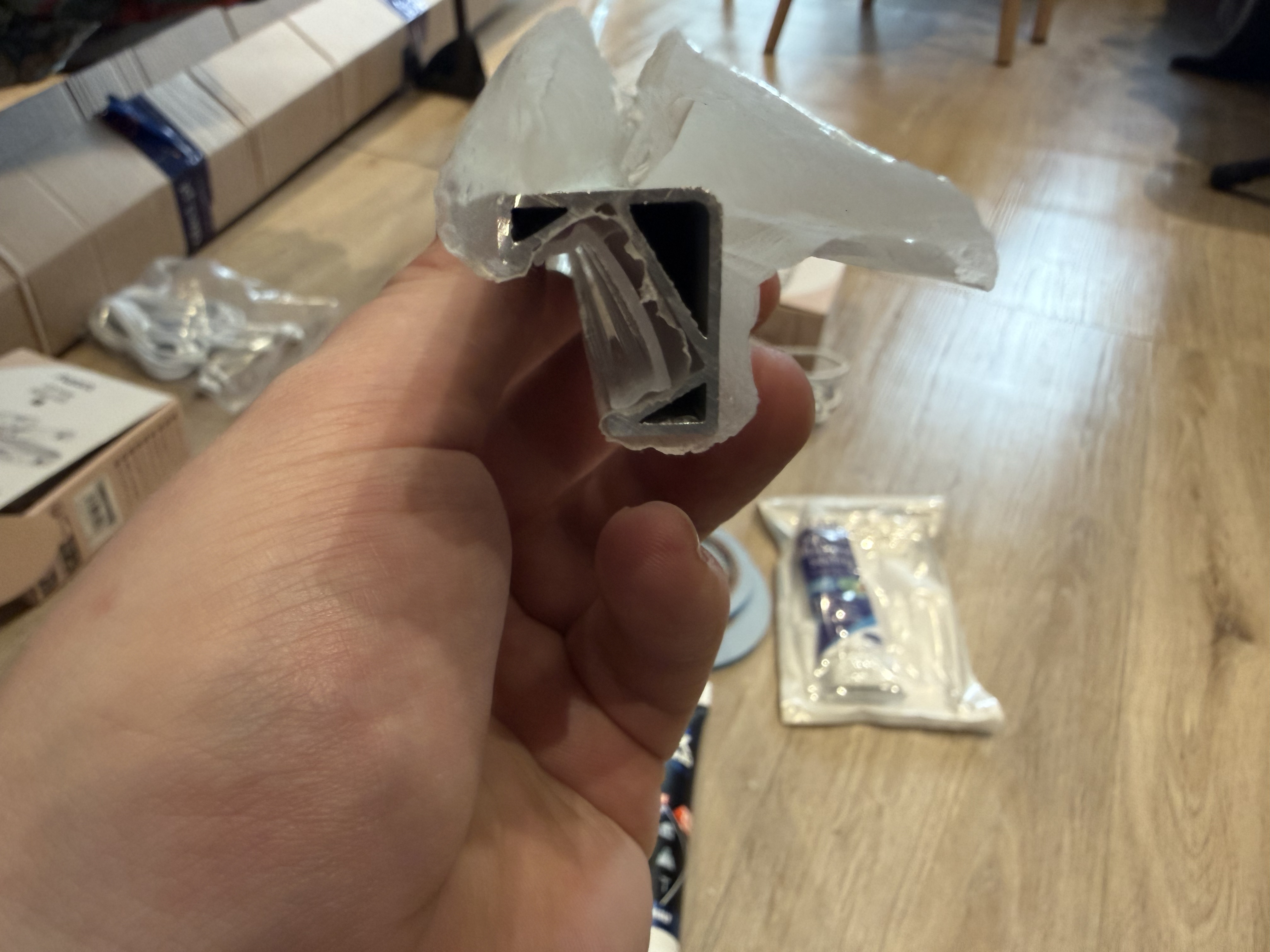
- 4m of LED profiles/channels (angled 30/60 degrees, those can be mounted either on the 30 or 60 deg side)
- mounting tape (the blue tape in the picture)
- mounting adhesive
- 6m of 5-core LED cable
- electrical silicone sealant
DAY 1 PART 1: Installing the LED profiles
My profiles are 30/60 degrees, which means they allow to mount the LED strip at an angle and you can choose either side.
I cut the LED profiles into the following sections: 80cm, 50cm, 50cm, 100cm, 117cm, 83cm.
The LED profiles are made from aluminum and they will expand and shrink during the year so they need to be cut in parts because of this. Another reason of this is that I have rods below the railing and I cannot mount one continuous strip underneath.
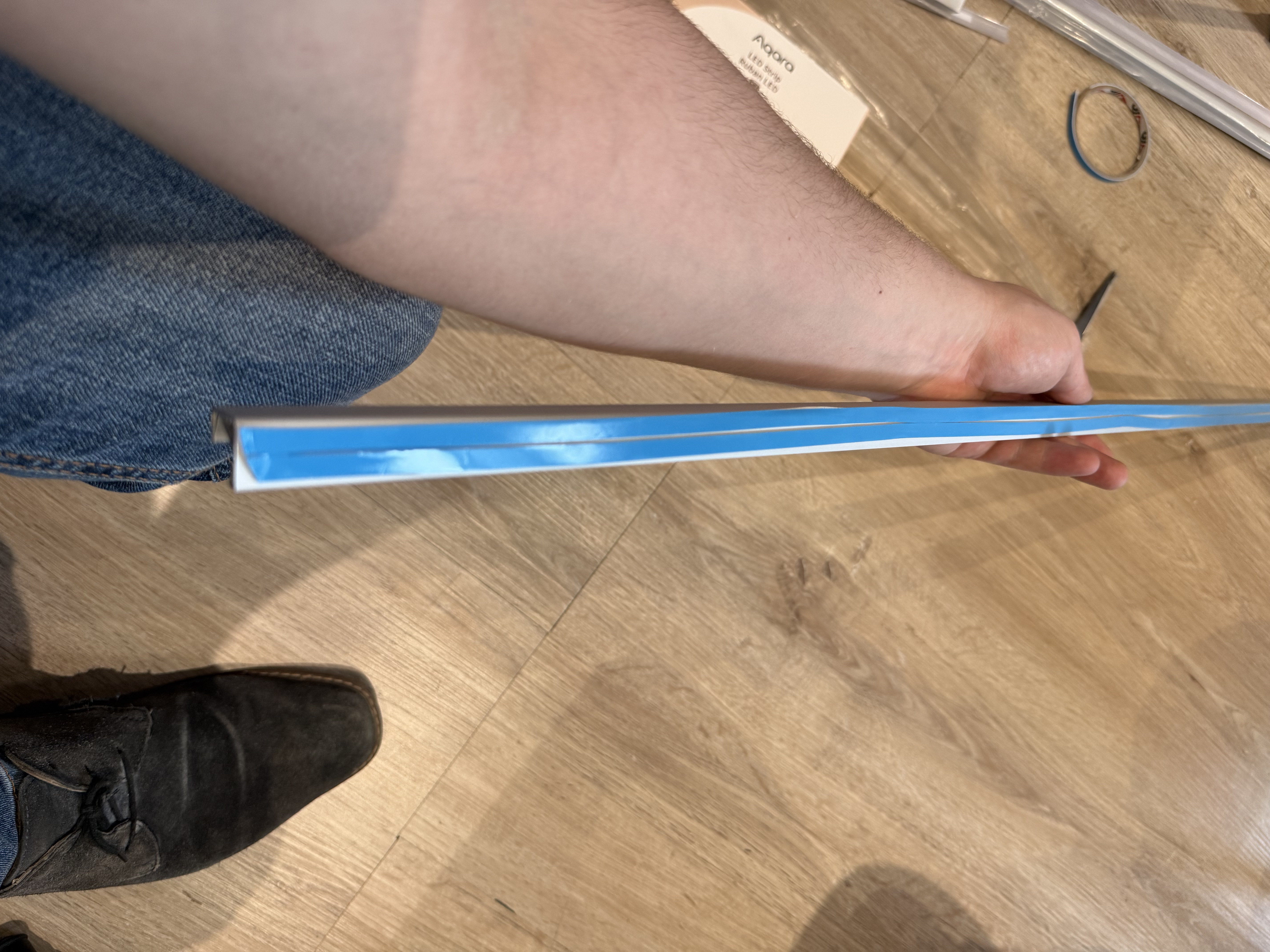
The mounting adhesive will take about 24 hours to harden so I used the two-sided LED mounting tape to secure the tape.
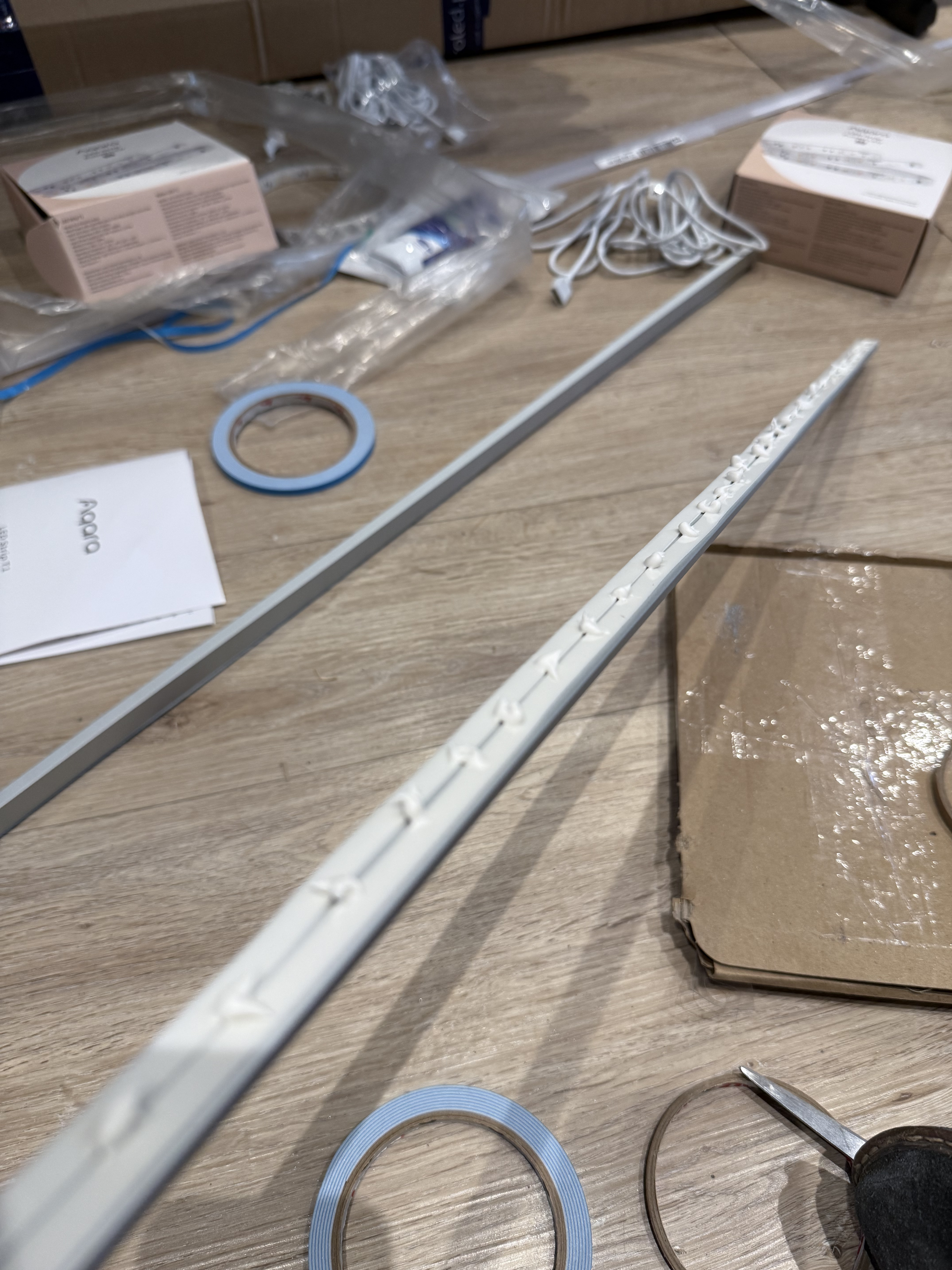
Here’s the tape with a bit of glue, it’s not much, but it’s enough. I have used the same glue to install the hooks for a balcony net, and the net is tight and holds the vines for 3 years straight. So even with this amount of glue, it’s not going anywhere.
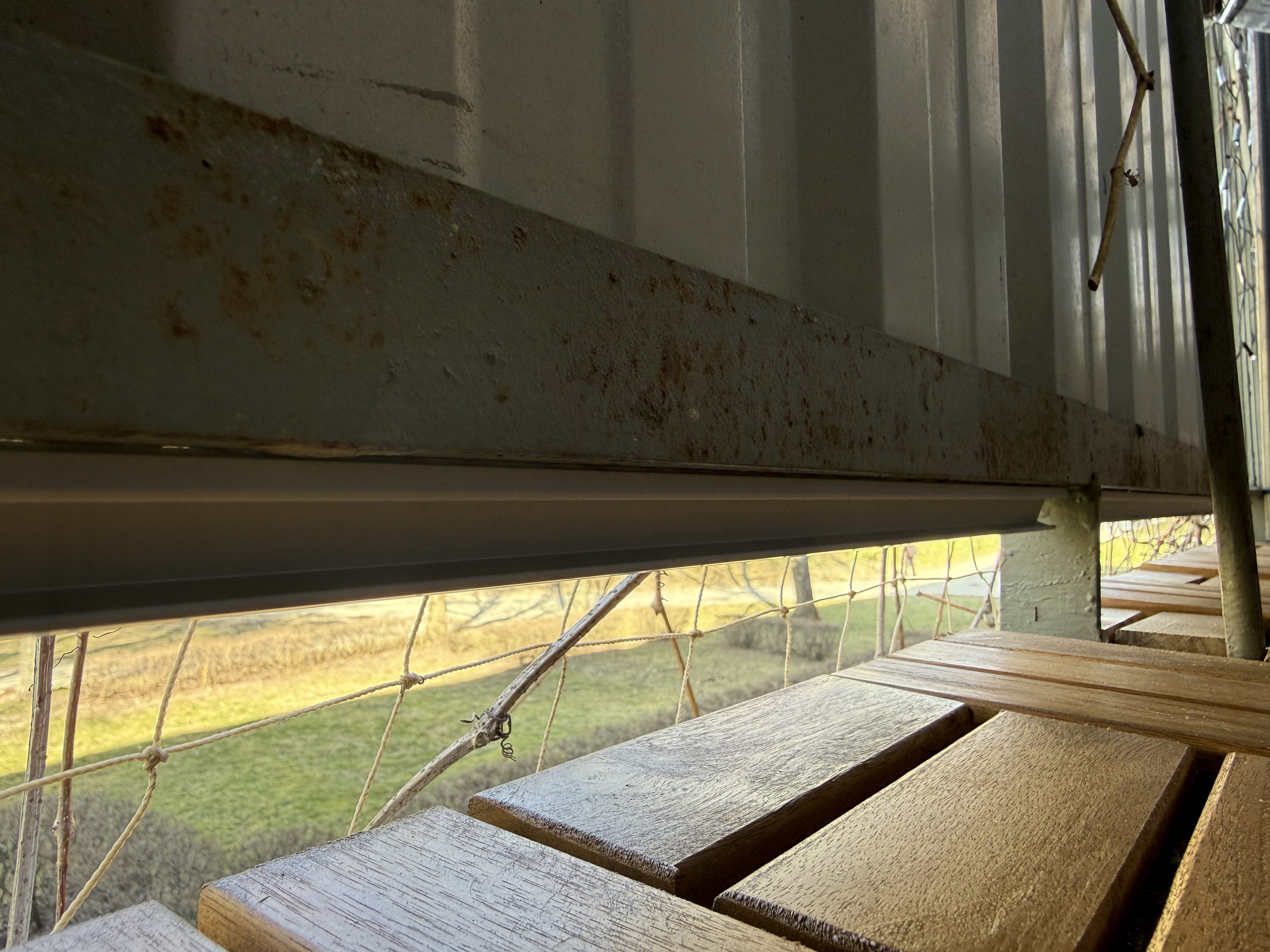
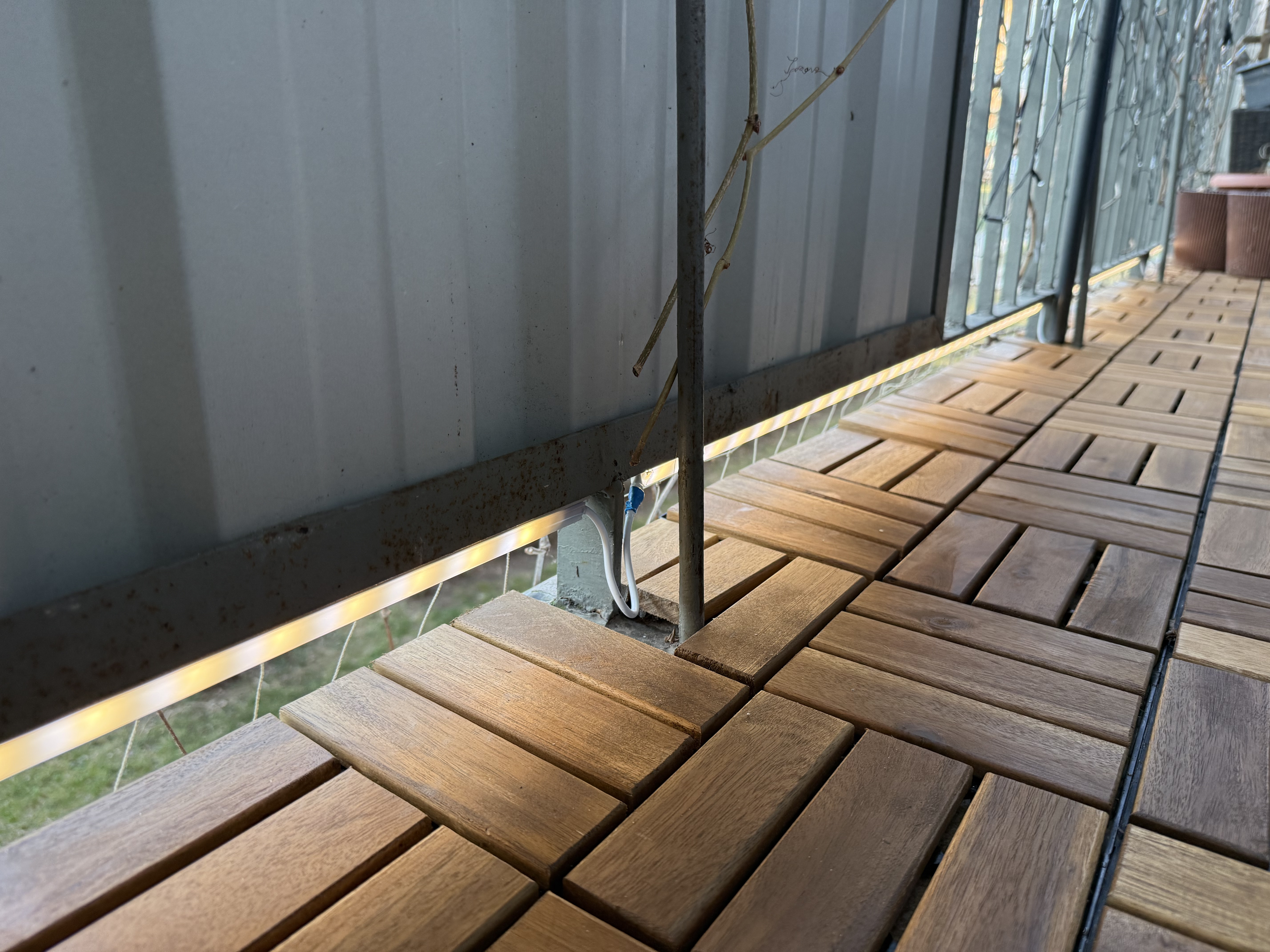
Here’s the LED profiles installed underneath the railing (ignore the rust, I’ll fix it later). Notice I left some space near the edges so the profiles can expand during summer.
DAY 1 PART 2: Soldering
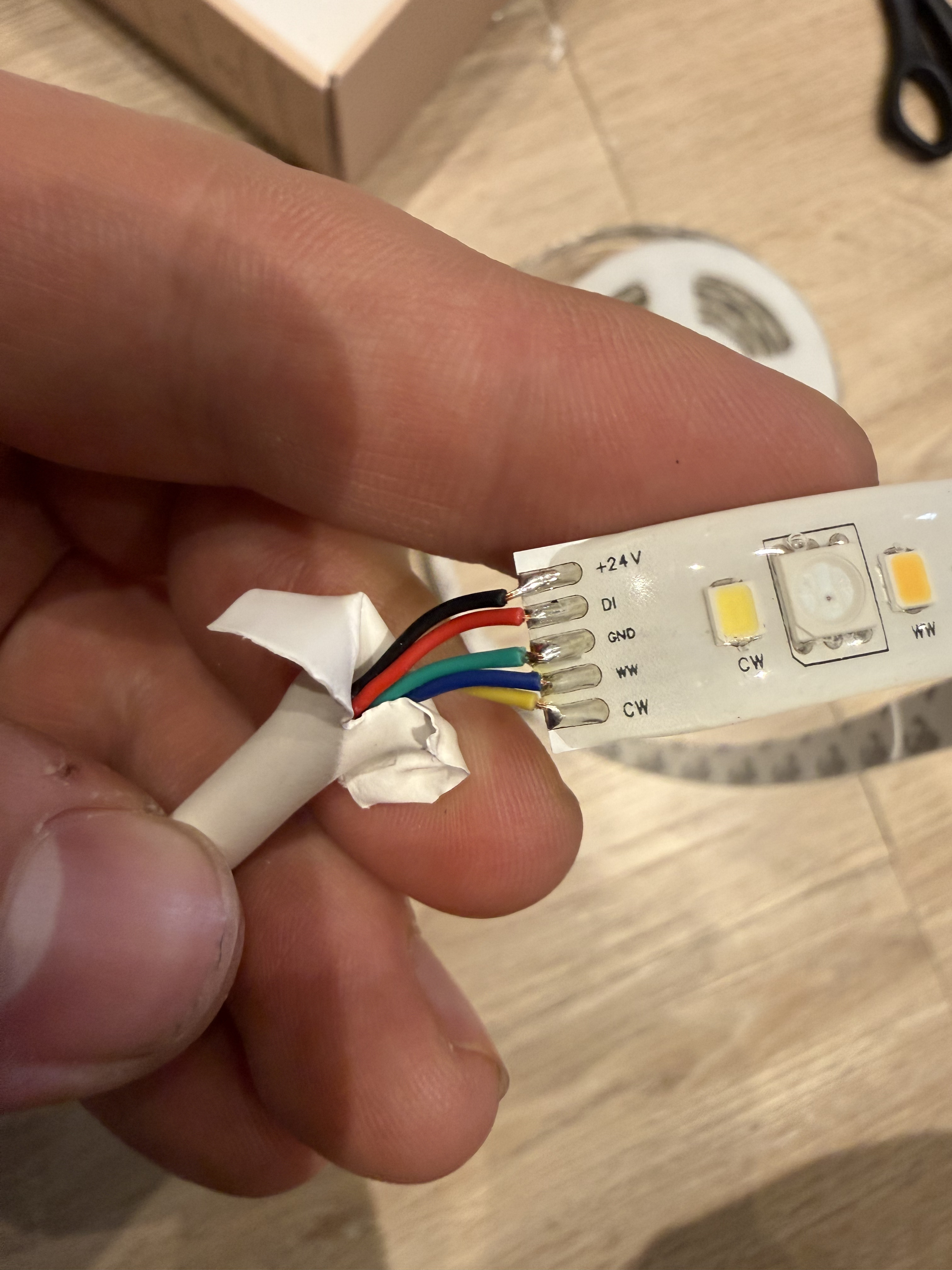
This took me a few hours, especially because I wanted to be careful with the pins. At the beginning, I took this picture of the wire colors for future reference:
My wires are different colors (black, red, green, white, yellow), so this picture was also a future reference for me. Notice how close the pins are, it’s really easy to leave some solder that will connect the two pins.
For example, if you leave solder between GND and WW, then the whole strip will be lit with warm white 100% of the time (the strip will not be able to turn it off).
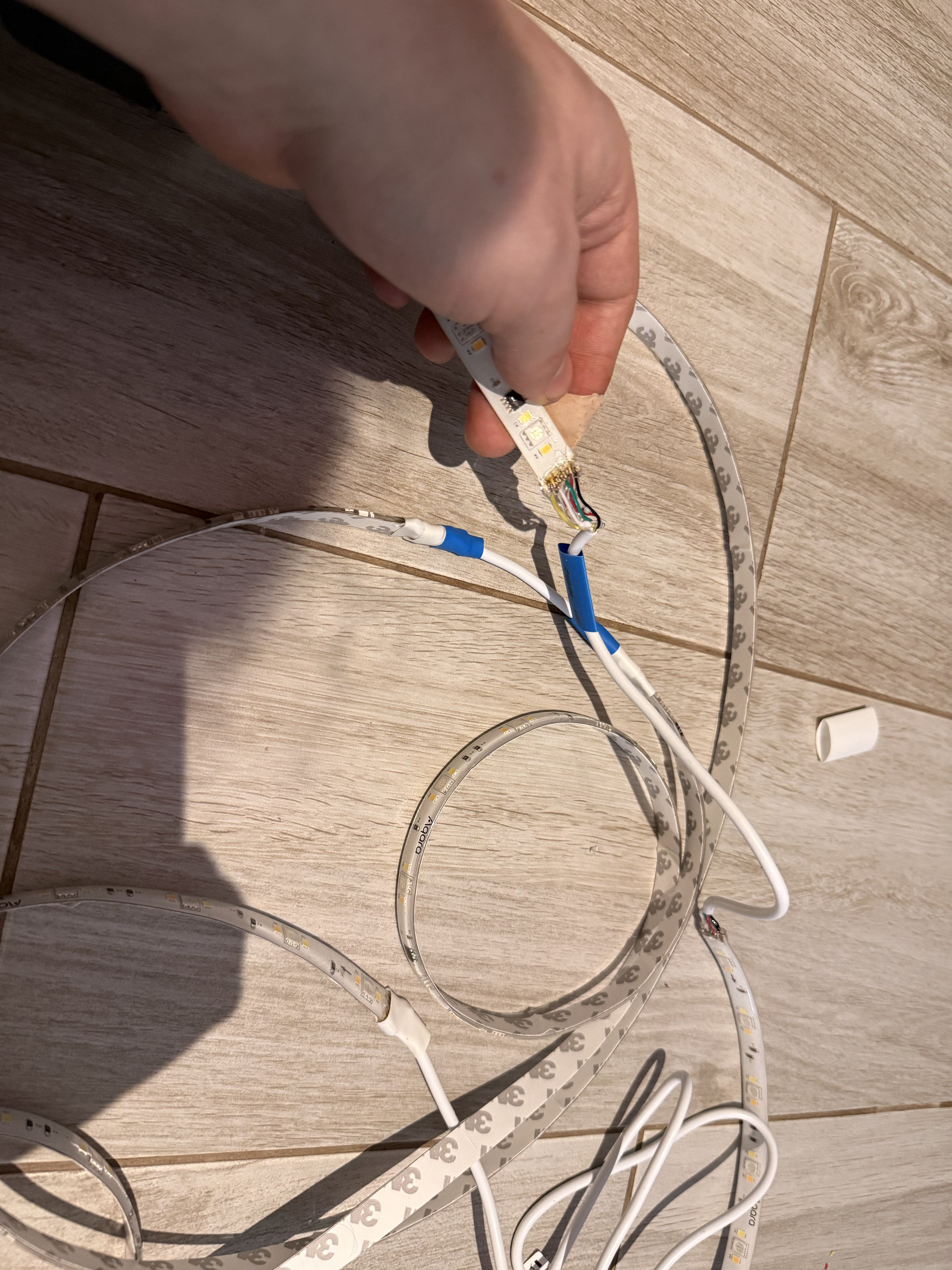
So I soldered a 3m wire at the beginning, and then used 20cm sections to connect 4 strips (80cm, 100cm, 100cm, 60cm, 3.4m of LEDs in total).
If you do it yourself, remember your connecting wires have to have a few cm more because the LED strip will shrink a bit with the channel during winter. And the wires have copper in them - they will also shrink.
After I finished soldering, I tested the LED strip - all good! So now it was time to seal the connections.
I used the silicone electrical sealant to secure the connections. After about 2 hours, when the outer layer was kind of solid, I added the heat-shrink tubing to make it a bit more stiff and less prone to mechanical and weather wear.
| Tip: High humidity and above room temperature (28-35°C) will cause the sealant to dry faster. Do not use any hair dryers to speed up the process, it can blow the wet sealant away or unsolder electronics. |
After installing the tubing, I used the silicone again to seal the little crevices at the edges of the tubing (it was not 100% tight).
Now, with the silicone inside and outside, I left it to dry for 24h.
DAY 2: Installing the LED strip
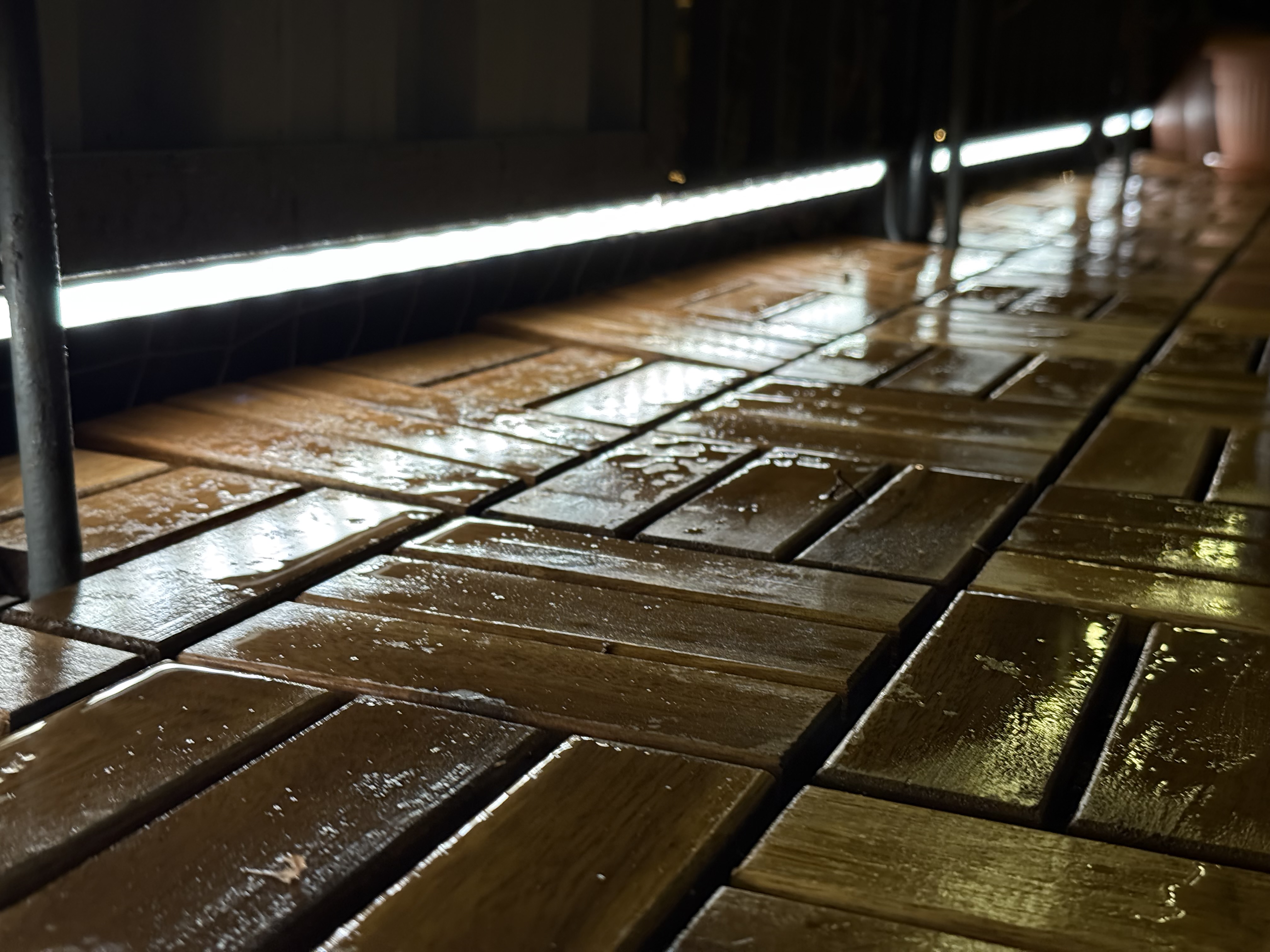
Now, as the glue of LED profiles hardened and the sealant dried, it’s time to install the LED strip.
I pulled the strip through the railing support and put it in the LED channels.
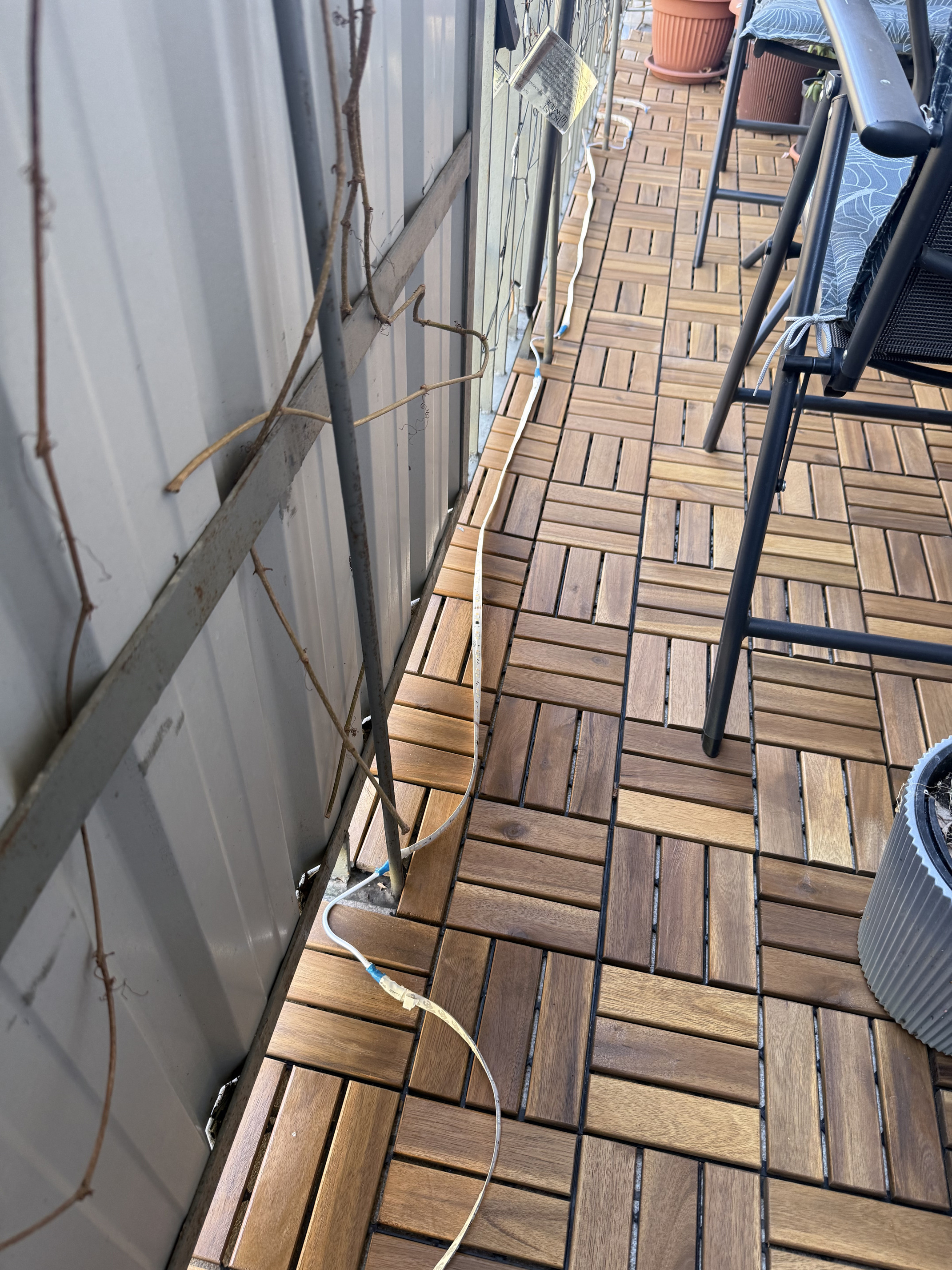
Notice that the connections are loose - it’s to allow them to shrink. The cables are pointed downwards so the rain will go onto the floor, not into the LED channels.
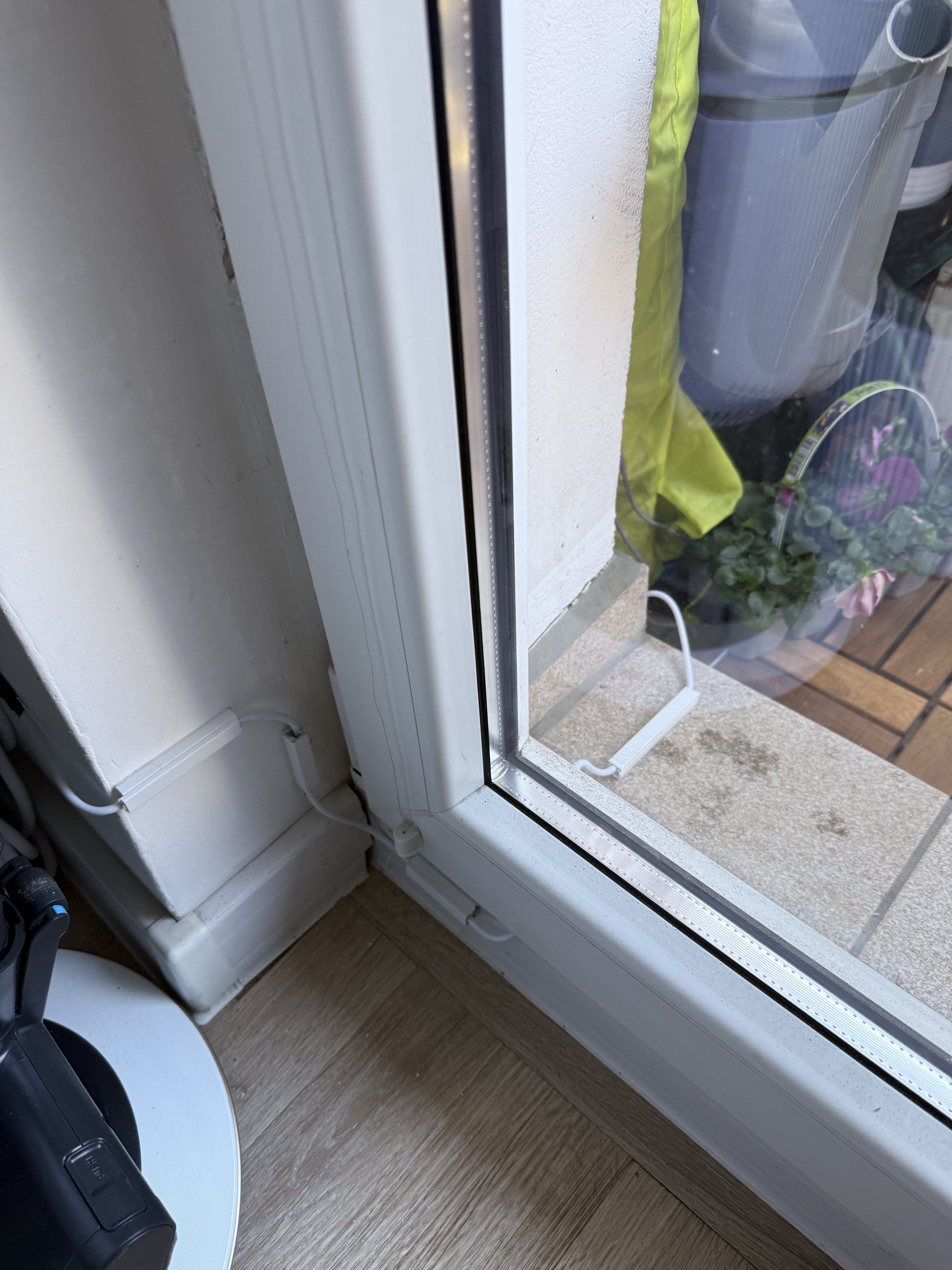
The LED transformer/controller is installed inside, and I put the cable between the floor panels and used the cable channels to secure it in place (so it won’t be moved when the door is opened/closed, minimizes the wear on it).
Of course, the cable is not tight, there’s a loop before the channel and another loop at the end of the LEDs - those will allow the cable to shrink in winter.
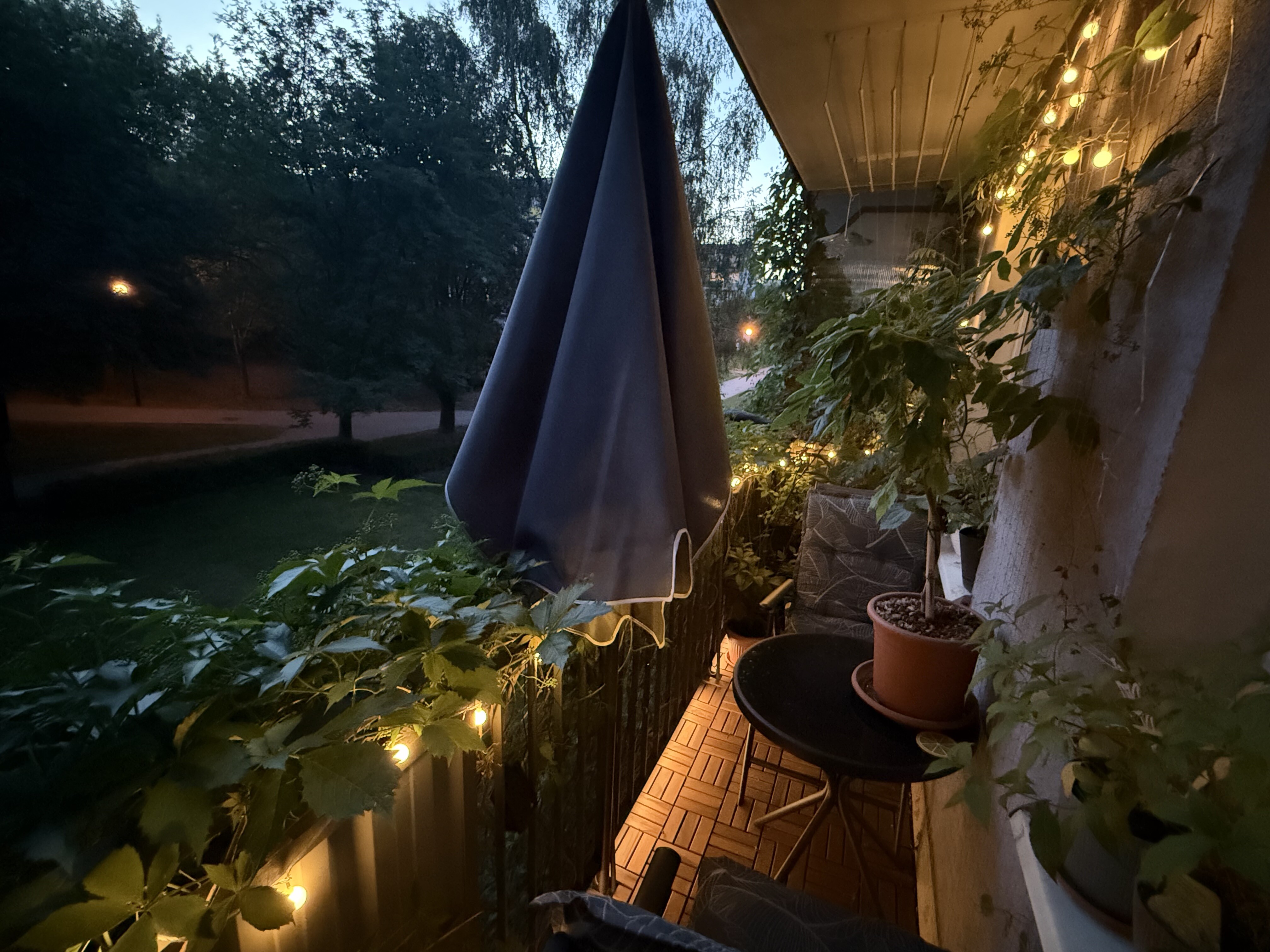
And the most important part of this whole project - wife is happy